Dissents, both opinions and votes, are particularly revealing. As I've explained numerous times on New York Court Watcher [See e.g., NYCOA: Criminal Appeals (Part 3)--Voting & Decisional Patterns (Mar. 13, 2019)] and elsewhere [See e.g., Great Dissents: 'Matters of High Principle' at the Court of Appeals, 94 N.Y. ST. B.J. at 23 (Nov./Dec. 2022)]--and as judicial scholars have long understood--these open disagreements with the majority are invaluable in providing insights into the policies, principles, preferences, philosophies, etc. of the dissenters and of the court's majority. Choices have been made. These choices become apparent when the options are spelled out in the dueling majority and dissenting opinions. Beyond that, over a series of divided decisions, the choices made reveal patterns or, in Cardozo's phrase, "stream[s] of tendency."
These revelations, patterns, or "streams," are, of course, valuable not only to judicial scholars. They are also helpful, indeed indispensable, to lawyers who ought to understand the courts and judges before whom they are arguing. Likewise for citizens who wish to be informed about the same. And at least as vitally important, for the judges themselves who--as Cardozo, Holmes, and others among our finest jurists have recognized--are often unaware of their own leanings, deep-seated values and biases, and judicial philosophies.
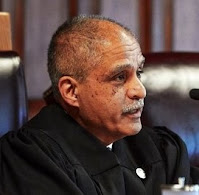 |
| Chief Judge Wilson Credit: Ryland West/ALM |
Let's get to it.
Reviewing the Court of Appeals decisions over the past few years--concentrating on the latter years under Chief Judge Janet DiFiore through the just-completed first full year under Rowan Wilson--one rather startling change stood out. There has, indeed, been a remarkable change in who has been dissenting and, concurrently, in the choices regularly being made by the majority.
[N.B., this is emphatically NOT about the merits of the changes or about the comparative wisdom, equity, or quality of legal analysis in the dissenting or majority positions. To be sure, I have my own preferences and views. But this is about the facts--the data which, believe me, requires a considerable amount of tedious effort to collect. The Court does not make it easy!]
 |
| Judge Cannataro Credit: Ryland West/ALM |
Here's the rest of it: since Wilson has been Chief Judge, Cannataro has been dissenting fairly regularly. In fact, through the first full year of Wilson's tenure as Chief Judge (Fall 2023 through Spring 2024), Cannataro has actually dissented more frequently than Wilson. Again, a startling turnaround.
Here's what that looks like:
(click to enlarge for a better view)

Whether or not this is a welcome development is not the point. Keep in mind that the issues in these appeals that result in divided decisions are close. There are usually strong arguments, legal and policy, on both sides. Unless one chooses to be ideologically blind or otherwise hopelessly biased, the fact is that the Court could legitimately have decided most of these cases either way.
The positions taken and the arguments made in the dissent might well have been the majority at another time with a different composition on the Court. One side might turn out to be wiser or fairer or more in line with the available legal materials. But those views are usually matters of personal or professional opinion and preference.
Let's take a look at a few illustrative dissents--by Wilson during the final year of the DiFiore era, and by Cannataro during this just-concluded first full year under Wilson.
Even casual followers of the Court are aware of Wilson's dissenting opinion in Nonhuman Rights Project, Inc. v. Breheny (2022) where he disagreed with the majority's rejection of any liberty interest for Happy the Elephant, whose legal representatives sought habeas corpus to free her from the Bronx Zoo. Likewise, for Wilson's dissenting opinion in Harkenrider v. Hochul (2022), where he argued, among other things, that the statistical evidence that the majority relied upon to conclude that the redistricting at issue was unconstitutionally partisan was fatally flawed.
Other dissents display some rather consistent patterns in Wilson's decisional choices. For example, in Cutaia v. Board of Managers (2022), joined by Judges Jenny Rivera and Shirley Troutman, he argued that the worker, who was seriously injured on the job as a result of an inadequate ladder provided by the contractor, was entitled to summary judgment on his state Labor Law claim. Likewise, in Toussaint v. Port Authority (2022), again joined by Rivera and Troutman, Wilson sided with the worker who was seriously injured on the job when he was crushed by a "power buggy" being operated by an untrained driver, in violation of safety regulations of promulgated by the state labor department.
In illustrative criminal cases, Wilson dissented in People v. Dawson (2022), in an opinion joined by Rivera, arguing that the defendant's waiver of Miranda rights, in the absence of counsel which he had requested, was a violation of the Court's traditionally scrupulous protection of due process, the right to counsel and against self-incrimination. And in People v. Ibarguen (2021), again joined by Rivera, argued that the defendant had standing to challenge the warrantless entry and search of his friend's residence where he was a dinner guest.
Several other Wilson dissents, in both civil and criminal cases, share the same inclinations to side with injured workers and to rigorously safeguard the rights of the accused.
As for the Cannataro dissents during Wilson's first full year as Chief Judge, most observers of the Court are aware that he dissented in People v. Weinstein (2024), arguing that the majority erred in holding that the evidence of uncharged misconduct was illegally admitted to prove the defendant's criminal propensity. And in Hoffmann v. New York State Independent Redistricting Commission (2023), he disagreed with the majority's ruling that the urgent redistricting ordered by the DiFiore Court in Harkenrider, to be done by the trial court, was only an interim measure.
Other dissents, like those of Wilson, reveal some common denominators. For example, in Brookdale Physicians v. NYC Department of Finance (2024), in an opinion joined by Judges Michael Garcia and Madeline Singas, he sided with the building owner against the city finance department, arguing that the revocation of the building's tax-exempt status, on the ground that the tenant was a for-profit corporation, was arbitrary and capricious. And in Tax Equity Now v. City of New York (2024), he authored a separate dissenting opinion, disagreeing with the majority's holding that the complainants had sufficiently pleaded a cause of action, under the state's Real Property Tax Law, that the city's property tax system was unfair and favored wealthy residents.
In criminal cases, the common threads are even sharper. For example, in People v. Telfair (2023), in an opinion joined by Garcia and Singas, Cannataro disagreed with the majority's ruling that the evidence of prior bad acts by the defendant constituted inadmissible proof of criminal propensity. In People v. Brown (2023), in an opinion again joined by Garcia and Singas, he disagreed with the majority's ruling that it was a violation of due process to designate the defendant as a sex offender for a robbery, which lacked any sexual act or motive, merely because it took place in the presence of a child. And in People v. Cuencas (2023), in another dissenting opinion joined by Garcia and Singas, he argued that the majority wrongfully decided that warrantless police entry into the suspect's home was unreasonable because the lower court's "mixed question" determination was to the contrary.
Cannataro's dissents, these few discussed and others, evince inclinations to side with the rights of property and business owners and to be skeptical about seemingly technical obstacles to criminal law enforcement.
Let's conclude with this observation. In all of these cases, whether they involved Wilson or Cannataro dissenting, they were on opposite sides. The positions embraced by Cannataro always coincided with those of the majority while DiFiore was Chief Judge. In the Wilson era, however, the dynamics are different. Indeed, the positions taken by Cannataro coincide with those of the majority less frequently than do those of Wilson--whose positions in the DiFiore era were regularly at odds with the majority.
No doubt about it, there has been a transition at the Court of Appeals, not only in the center seat but also in the Court's general decisional outcomes.


