Showing posts with label Rivera_Jenny. Show all posts

Wednesday, July 10, 2024

Part 6, Who's Dissenting?--NYCOA: The Wilson Uptick

Dissents, both opinions and votes, are particularly revealing. As I've explained numerous times on New York Court Watcher [See e.g., NYCOA: Criminal Appeals (Part 3)--Voting & Decisional Patterns (Mar. 13, 2019)] and elsewhere [See e.g., Great Dissents: 'Matters of High Principle' at the Court of Appeals, 94 N.Y. ST. B.J.  at 23 (Nov./Dec. 2022)]--and as judicial scholars have long understood--these open disagreements with the majority are invaluable in providing insights into the policies, principles, preferences, philosophies, etc. of the dissenters and of the court's majority. Choices have been made. These choices become apparent when the options are spelled out in the dueling majority and dissenting opinions. Beyond that, over a series of divided decisions, the choices made reveal patterns or, in Cardozo's phrase, "stream[s] of tendency."

These revelations, patterns, or "streams," are, of course, valuable not only to judicial scholars. They are also helpful, indeed indispensable, to lawyers who ought to understand the courts and judges before whom they are arguing. Likewise for citizens who wish to be informed about the same. And at least as vitally important, for the judges themselves who--as Cardozo, Holmes, and others among our finest jurists have recognized--are often unaware of their own leanings, deep-seated values and biases, and judicial philosophies.
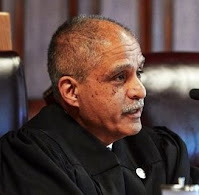
Chief Judge Wilson
Credit: Ryland West/ALM
So, in identifying any transition at New York's highest court coinciding with the elevation of Rowan Wilson as Chief Judge, it might well be instructive to look at any changes in the Court's divided decisions. More specifically, to look at whether there have been changes in who is dissenting and what they are dissenting about. This would, of course, tell us whether there have been changes in who is in the majority and what choices the majority has been making.

Let's get to it.

Reviewing the Court of Appeals decisions over the past few years--concentrating on the latter years under Chief Judge Janet DiFiore through the just-completed first full year under Rowan Wilson--one rather startling change stood out. There has, indeed, been a remarkable change in who has been dissenting and, concurrently, in the choices regularly being made by the majority.
[N.B., this is emphatically NOT about the merits of the changes or about the comparative wisdom, equity, or quality of legal analysis in the dissenting or majority positions. To be sure, I have my own preferences and views. But this is about the facts--the data which, believe me, requires a considerable amount of tedious effort to collect. The Court does not make it easy!]

Judge Cannataro
Credit: Ryland West/ALM
Here it is: while Janet DiFiore was Chief Judge, then-Judge Rowan Wilson dissented regularly. Judge Anthony Cannataro never did. That's right, Wilson, whether writing his own dissenting opinions or joining a dissenting opinion of one of his colleagues, did so frequently. Cannataro, from his appointment to the Court in June 2021 through the last full year of DiFiore's tenure (Fall 2021 through Spring 2022), did not write or vote in dissent even once.

Here's the rest of it: since Wilson has been Chief Judge, Cannataro has been dissenting fairly regularly. In fact, through the first full year of Wilson's tenure as Chief Judge (Fall 2023 through Spring 2024), Cannataro has actually dissented more frequently than Wilson. Again, a startling turnaround.

Here's what that looks like:
(click to enlarge for a better view)
Whether or not this is a welcome development is not the point. Keep in mind that the issues in these appeals that result in divided decisions are close. There are usually strong arguments, legal and policy, on both sides. Unless one chooses to be ideologically blind or otherwise hopelessly biased, the fact is that the Court could legitimately have decided most of these cases either way.

The positions taken and the arguments made in the dissent might well have been the majority at another time with a different composition on the Court. One side might turn out to be wiser or fairer or more in line with the available legal materials. But those views are usually matters of personal or professional opinion and preference. 

Let's take a look at a few illustrative dissents--by Wilson during the final year of the DiFiore era, and by Cannataro during this just-concluded first full year under Wilson.

Even casual followers of the Court are aware of Wilson's dissenting opinion in Nonhuman Rights Project, Inc. v. Breheny (2022) where he disagreed with the majority's rejection of any liberty interest for Happy the Elephant, whose legal representatives sought habeas corpus to free her from the Bronx Zoo. Likewise, for Wilson's dissenting opinion in Harkenrider v. Hochul (2022), where he argued, among other things, that the statistical evidence that the majority relied upon to conclude that the redistricting at issue was unconstitutionally partisan was fatally flawed.

Other dissents display some rather consistent patterns in Wilson's decisional choices. For example, in Cutaia v. Board of Managers (2022), joined by Judges Jenny Rivera and Shirley Troutman, he argued that the worker, who was seriously injured on the job as a result of an inadequate ladder provided by the contractor, was entitled to summary judgment on his state Labor Law claim. Likewise, in Toussaint v. Port Authority (2022), again joined by Rivera and Troutman, Wilson sided with the worker who was seriously injured on the job when he was crushed by a "power buggy" being operated by an untrained driver, in violation of safety regulations of promulgated by the state labor department.

In illustrative criminal cases, Wilson dissented in People v. Dawson (2022), in an opinion joined by Rivera, arguing that the defendant's waiver of Miranda rights, in the absence of counsel which he had requested, was a violation of the Court's traditionally scrupulous protection of due process, the right to counsel and against self-incrimination. And in People v. Ibarguen (2021), again joined by Rivera, argued that the defendant had standing to challenge the warrantless entry and search of his friend's residence where he was a dinner guest.

Several other Wilson dissents, in both civil and criminal cases, share the same inclinations to side with injured workers and to rigorously safeguard the rights of the accused.

As for the Cannataro dissents during Wilson's first full year as Chief Judge, most observers of the Court are aware that he dissented in People v. Weinstein (2024), arguing that the majority erred in holding that the evidence of uncharged misconduct was illegally admitted to prove the defendant's criminal propensity. And in Hoffmann v. New York State Independent Redistricting Commission (2023), he disagreed with the majority's ruling that the urgent redistricting ordered by the DiFiore Court in Harkenrider, to be done by the trial court, was only an interim measure.

Other dissents, like those of Wilson, reveal some common denominators. For example, in Brookdale Physicians v. NYC Department of Finance (2024), in an opinion joined by Judges Michael Garcia and Madeline Singas, he sided with the building owner against the city finance department, arguing that the revocation of the building's tax-exempt status, on the ground that the tenant was a for-profit corporation, was arbitrary and capricious. And in Tax Equity Now v. City of New York (2024), he authored a separate dissenting opinion, disagreeing with the majority's holding that the complainants had sufficiently pleaded a cause of action, under the state's Real Property Tax Law, that the city's property tax system was unfair and favored wealthy residents.

In criminal cases, the common threads are even sharper. For example, in People v. Telfair (2023), in an opinion joined by Garcia and Singas, Cannataro disagreed with the majority's ruling that the evidence of prior bad acts by the defendant constituted inadmissible proof of criminal propensity. In People v. Brown (2023), in an opinion again joined by Garcia and Singas, he disagreed with the majority's ruling that it was a violation of due process to designate the defendant as a sex offender for a robbery, which lacked any sexual act or motive, merely because it took place in the presence of a child.  And in People v. Cuencas (2023), in another dissenting opinion joined by Garcia and Singas, he argued that the majority wrongfully decided that warrantless police entry into the suspect's home was unreasonable because the lower court's "mixed question" determination was to the contrary.

Cannataro's dissents, these few discussed and others, evince inclinations to side with the rights of property and business owners and to be skeptical about seemingly technical obstacles to criminal law enforcement.

Let's conclude with this observation. In all of these cases, whether they involved Wilson or Cannataro dissenting, they were on opposite sides. The positions embraced by Cannataro always coincided with those of the majority while DiFiore was Chief Judge. In the Wilson era, however, the dynamics are different. Indeed, the positions taken by Cannataro coincide with those of the majority less frequently than do those of Wilson--whose positions in the DiFiore era were regularly at odds with the majority.

No doubt about it, there has been a transition at the Court of Appeals, not only in the center seat but also in the Court's general decisional outcomes.

Tuesday, January 3, 2023

Hochul's Pick for Chief Judge: The Commission's List and LaSalle's Record (Part 1)

Let me start by repeating that it is a disgrace that three sitting members of the Court of Appeals were excluded from the list of candidates for Chief Judge. Those three--Jenny Rivera, Rowan Wilson, and Shirley Troutman--were the Judges whose voting records have been more philosophically liberal than the others on the Court. It's hard to believe that the nominating commission that chose the seven candidates for Chief Judge was primarily motivated by merit as opposed to politics and ideology.

    Several court observers expressed dismay at the exclusion of Rivera, Troutman, and Wilson.
    “I think it’s a disgrace that none of them were placed on the list,” said Vincent Bonventre, an expert on the Court of Appeals and professor at Albany Law School. “If the commissioners were looking at pure merit, somebody like Wilson is just absolutely brilliant.” In 2015, the last time the chief judge position opened up, Wilson was on the shortlist.
    But the idea that merit is the only factor is “laughable,” Bonventre said. “Of course there are politics involved.”
    Rivera’s and Wilson’s liberalism and frequent dissents from DiFiore likely hurt their chances at making the shortlist, Bonventre said. Of the 12 panelists who picked the shortlist, DiFiore and her ally Cuomo appointed seven, and Republican legislative leaders appointed another two. In order to advance to the shortlist, applicants need at least eight votes. 
    “If you’re a commissioner who was appointed by Chief Judge DiFiore, or you are a commissioner who was appointed by the Republicans, you might feel pretty unfavorably towards especially Wilson and Rivera,” due to their liberal dissents, Bonventre said. 
    The court’s three liberal judges, all of them people of color, two of whom had more seniority than Judge Cannataro, were among 41 applicants for the post, according to people familiar with the process. None of the liberal judges were approved by the commission. (The exclusion of the three liberal judges was reported earlier by New York Focus.)
    “It’s just totally inexcusable,” said Vincent Bonventre, a professor at Albany Law School and a longtime court observer. He pointed in particular to the omission of one judge, Rowan D. Wilson, who had been on the commission’s short list for the chief judge spot in 2015, when it last became open.
If those glaring omissions are disregarded--yes, it's difficult to ignore such deplorable exclusions--it must be acknowledged that the list of seven is a strong one. Here it is:
  • Governor Hochul's pick from the list, Hector D. LaSalle, Presiding Justice of the  Appellate Division, Second Department (courthouse in Brooklyn)--one of 4 departments of the state's intermediate appellate court and the busiest among them, as well as the busiest appellate court in the country; he has worked in the Suffolk County District Attorney's Office and in the state Attorney General's Office and has been an appellate judge for 9 years. 
  • Anthony Cannataro, a current Judge on the Court and the internally selected Acting Chief Judge--although the precise procedure is not clear--until a nominee of the Governor is confirmed by the Senate; he has considerable administrative experience, having supervised NYC's civil court before being appointed to the Court of Appeals in 2021; early in his career he clerked on the Court for Judge Carmen Ciparick.
  • Abbe R. Gluck, a Professor of Law and Professor of Internal Medicine at Yale; among other positions, she served as a law clerk for Supreme Court Justice Ruth Bader Ginsburg and as Special Counsel to President Biden.
  • Jeffrey K. Oing, a Justice of Appellate Division, First Department (courthouse in Manhattan); early in his career he served as a law clerk to Chief Justice Wilentz of the New Jersey Supreme Court and later as a law clerk to judges on state Supreme Court (the misleading name of NY's top trial court); he has been an appellate judge for 5 years.
  • Alicia Ouellette, President and Dean, Albany Law School; early in her career she served as a law clerk for Court of Appeals Judge Howard Levine and then as an Assistant Solicitor in the state Attorney General's office where she argued over 100 appellate cases; she has served as Dean and President of Albany Law School for the last 9 years.
  • Edwina G. Richardson-Mendelson, Deputy Chief Administrative Judge for Justice Initiatives; in addition to a law degree, she has a Ph.D. in criminal justice; among other positions, she has worked as an attorney for The Legal Aid Society and for NY County Family Court; she has considerable administrative experience both in supervisory positions in Family Court in NYC and as a Deputy Chief Administrative Judge for the state; she has also served as a trial judge for 20 years.
  • Corey L. Stoughton, Attorney-in-Charge, Special Litigation and Law Reform, The Legal Aid Society; early in her career she served as a law clerk to Sixth Circuit Court of Appeals Judge Cornelia Kennedy; she later served for 10 years as a supervising attorney for the NYCLU, then as a senior counsel in the US DOJ Civil Rights Division, and the last few years with The Legal Aid Society.
Again, notwithstanding the nominating commission's inexcusable exclusion of the 3 Judges on the more-liberal wing of the Court of Appeals, it can hardly be denied that this is a strong list  It would have been even stronger if....

Both points are critically important. New York's high court needs a strong Chief Judge--perhaps now even more than usual. Governor Hochul herself understands that. As she told Susan Arbetter in an interview on Spectrum News's Capital Tonight, "Think back on the legacy of this Court in the past...I want to get back to that preeminence."

Virtually every close observer of the Court of Appeals with whom I have spoken--lawyers, judges, academics, reporters--are all expressing a similar view. The court has been considerably diminished in the last few years and needs to regain its traditional quality and prestige.

I've been candid when asked my views on these matters.
    [W]hen asked if DiFiore was a good chief judge in the vein of former Court of Appeals Chief Judges Jonathan Lippman and Judith Kaye, Bonventre said the court has taken a status hit under her watch.
    “I will say that during her tenure, the court’s reputation has really plummeted. I don’t think you can find anybody serious and candid who will tell you that the court is particularly well-respected today. It’s not. Its reputation has really been on the downside,” Bonventre said.
    Bonventre, who has written extensively about the Court of Appeals, had favorably compared the court to the U.S. Supreme Court prior to DiFiore’s tenure.
    “When Jonathan Lippman was chief, I remember chief justices from the, around the country, telling me, ‘Boy this is a great court again’. It was a great court early on in [Judith] Kaye’s tenure, certainly when [Lawrence] Cooke was chief. A lot of [Sol] Wachtler’s tenure, [Charles] Breitel’s, [Stanley] Fuld’s. You can go back and back. It has not been a very good court (lately),” he said.
    When asked why, Bonventre blamed former Gov. Cuomo.
    “That’s another interesting question. I don’t think it’s necessarily because of Chief Judge DiFiore. For one thing, look, Gov. Andrew Cuomo didn’t really care much about the court,” Bonventre said. “Pataki wanted to make the court in a particular image. Certainly, Mario Cuomo was very serious about the court. I don’t think Andrew Cuomo was very serious about it.”
    According to Bonventre, the younger Cuomo would “just bypass” extraordinary candidates that were on the list submitted to him by the Judicial Screening Commission. 
    “Erin Peradotto, Michael Bosworth, Caitlin Halligan. It would have been an extraordinary strong court. He bypassed them,” Bonventre stated. 
    The other issue weighing down the court is the dynamics in play among the judges. 
    “When you have different opinions on the court, different sides, and they’re really nasty towards one another.  Or when you get 4-3 decisions, meaning they’re really close, and the majority doesn’t even sign its opinion – it will write some ditty little three or four paragraph unsigned memorandum.  And you have 3 colleagues writing long dissents? That kind of shows not much respect for colleagues. It doesn’t show a good dynamism within the court,” Bonventre said.
And In Seven Candidates for Chief Judge With Varied Backgrounds, There's Something for Everyone, by Brian Lee, NYLJ, Nov. 28. 2022:   
Albany Law School professor Vin Bonventre called it an “extraordinary” list of applicants whose only “glaring omission” is Court of Appeals Judge Rowan Wilson.
    Presuming Wilson applied, Bonventre said, “myself and plenty of other lawyers in New York think it’s a disgrace that he’s not on the list.”
    The professor said he suspects Wilson didn’t make the cut because he’s a frequent dissenter on the high court.
    “The commission might well be interested in getting a more consensus candidate for chief judge,” said Bonventre, adding “it’s very curious” Cannataro was the only current Court of Appeals judge to emerge from the commission, presuming others applied.
    “It’s a pretty extraordinary list,” Albany Law School Professor Vincent Bonventre, a longtime Court of Appeals watcher, told The Post on Friday. “Each one of them comes with very strong reputations. They have very impressive credentials and backgrounds.”
    He added the next chief judge will have their work cut out for them considering how far the Court of Appeals has fallen in recent years from being the role model it once was for the rest of the nation.
    “The Court of Appeals is nowhere near the court that it traditionally has been,” Bonventre said. “I don’t think you can find anybody who honestly is going to tell you that it is.”

So those are my views on the Chief Judge list--the inclusions and exclusions--as well as the current state of the Court of Appeals and the critical importance at this time for a strong selection to help restore New York's highest tribunal to its traditional prominence as one of the nation's great courts.

In the next post, we'll look at Governor Hochul's nominee, Hector LaSalle. We'll look at his decisional record at the Appellate Division and, more specifically, at opinions he has authored which seem to have been overlooked by those who are opposing his confirmation.

Wednesday, March 27, 2019

NYCOA: Criminal Appeals (Part 4c)--More Recent Dissents That Should Have Been Majorities

In the last post, we looked at two dissents that protested majority decisions at New York's highest court that overturned convictions because of errors having nothing to do with guilt or innocence, and where there was no suggestion that the alleged error by the trial judge had caused any prejudice to the defendant. (See Part 4b.)

Now we turn to the other two previously previewed dissents that protested majority decisions that upheld convictions, despite serious questions about guilt, and where the Court of Appeals would not even permit a hearing to consider actual innocence.

Again, cheers for those dissents as glimmers of hope amidst dismay at the majority decisions.

People v. Tiger (2018) (Wilson, J., dissenting)
People v. Thibodeau (2018) (Rivera, J., dissenting)
In both Tiger and Thibodeau, the defendants sought post-conviction relief on the basis of actual innocence. They each sought a hearing, pursuant to New York's Criminal Procedure Law, to present evidence that had not been previously available or previously considered and that raised serious questions about guilt. In both cases, the Court of Appeals majority would not even permit a fact-finding hearing to assess that evidence and consider the claims of actual innocence.

In Tiger, by a 5-2 vote, the Court held that a guilty plea was an absolute bar to a subsequent innocence claim. According to the majority, "a voluntary guilty plea is inconsistent with a claim of factual innocence."

The majority rejected the request for an innocence hearing despite the circumstances which led the defendant to plead guilty. Despite the defendant's exoneration of any wrongdoing in a subsequent civil case. And despite the unanimous conclusion of the Appellate Division (New York's intermediate appeals court) that the defendant had established a prima facie showing of innocence that justified a hearing.

Judge Wilson
Judge Rowan Wilson emphatically decried the rigidity of the majority's ruling and its seeming indifference to the injustices it perpetuates:
Natascha Tiger pleaded guilty but is innocent. 
Ms. Tiger is neither the first nor last innocent person to plead guilty. Ms. Tiger's case...provides a compelling example...Faced with seven years in prison, she pleaded guilty after her lawyer told her she could not afford to hire an expert and a guilty plea could result in a suspended sentence. 
Subsequently, when the [victim's] family sued Ms. Tiger[, e]ven though [they] had to satisfy only the "preponderance of the evidence" standard, and not the "beyond a reasonable doubt" standard, the jury found that Ms. Tiger did not cause the [victim's] injury. 
Our modern criminal justice system "is for the most part a system of pleas, not a system of trials."...We know that some completely innocent people plead guilty. In 2016, a record-setting 166 people were exonerated nationally. Of those, 74 exonerees, or 45 percent, were convicted based on guilty pleas. Of the nearly 2,000 individuals who were exonerated between  1989 and October 2016, 17 percent pleaded guilty....Research shows that innocent defendants may be motivated to plead guilty for a variety of reasons: most prominently, the threat of a more serious charge and a far longer sentence upon electing to go to trial, the fact that a plea will offer a release from pre-trial detention if the offense is low-level, and concerns about the defendant's lawyer or the availability of evidence that would conclusively demonstrate innocence. 
Relatedly, we also know that innocent suspects falsely confess...More than 20 percent of known exonerations for murder were at least in part due to false confessions... Consistently with the research on guilty pleas, the research on false confessions shows that "[t]he most potent psychological inducement is the suggestion that the suspect will be treated more leniently if he confesses and more punitively if he does not."  
The majority is focused on the importance of the finality of the plea process, and the appropriate conservation of judicial resources. Those concerns are weighty. But "conservation of judicial resources" does not appear alongside "life, liberty and the pursuit of happiness."  
Former Chief Judge Jonathan Lippman described our courts' mission thus: 
"Every wrongful conviction is a stain on the reputation of the courts, eroding public trust and confidence in the legitimacy of our institutional status and the fairness and accuracy of our decisions. This only underscores why the judiciary, the focal point of the entire justice system, is absolutely duty-bound to lead the way in making sure that the criminal justice process is as fair and accurate as humanly possible." 
Today's decision inexplicably and unnecessarily denies that mission, eschewing our obligation in favor of further legislative action or executive clemency. I will not. [Citations omitted throughout.]
To which I say, Amen!

In Thibodeau, in an unsigned memorandum for a bare 4-3 majority, the Court of Appeals rejected another substantial actual innocence claim on the same day. The defendant's post-conviction motion was denied by a hearing judge, despite considerable new evidence that others actually committed the kidnapping for which the defendant was convicted many years earlier. The hearing judge ruled that the evidence didn't even raise a "probability" that the verdict at trial would have been "more favorable." The Court of Appeals majority upheld the ruling below on the ground that it was not an abuse of discretion.

Judge Rivera
Judge Jenny Rivera's dissenting opinion set forth in detail the new evidence. In her view and that of two other Judges who joined her, that evidence severely undermined a conviction that was somewhat troubling from the start, and it persuasively demonstrated much more than a mere "probability" that others were guilty and the defendant innocent:

Defendant Gary Thibodeau has been incarcerated for over two decades—almost a third of his life—for the kidnapping of a young woman who disappeared one morning and was never seen again. No physical or forensic evidence connected defendant to the abduction, and no witness ever identified defendant as the kidnapper or placed him at the scene where the victim was taken. Nor has defendant confessed to having committed the crime; rather, he has always maintained his innocence. He now asserts that newly discovered evidence points to three men who have admitted to abducting and murdering the victim[, and he] asks for an opportunity to present this third-party culpability evidence to a jury. 
Defendant presented evidence that three [identified] men...abducted the victim..killed her, and disposed of her body by cutting it up and sending it to Canada in a vehicle being scrapped. The evidence consisted of testimony by a multitude of witnesses to these three men's inculpatory statements, as well as documents that corroborated their guilt and defendant's innocence. 
At the hearing on the motion, defendant presented additional testimony by various witnesses implicating [the three men] in the abduction, including confessions by these three to the victim's abduction and murder. 
[D]efendant presented an exhaustive amount of corroborating evidence for the confessions. [Inter alia,]several witnesses have testified to statements by these three declarants that not only implicate them in the victim's disappearance, but constitute admissions of guilt of kidnapping and murder. [Moreover, t]here is no evidence that the witnesses concocted these powerful third-party statements of guilt for defendant's benefit, nor of a motive for the declarants to inculpate themselves in a kidnapping and murder or exculpate defendant. The witnesses are a variety of ages, occupations, and levels of closeness to the three declarants. The incriminating statements themselves are also varied. At times, the declarants explained what had occurred...Other times, the statements were made as a blatant commentary that the declarant was immune to prosecution because the victim would never be found and the wrong persons—the Thibodeau brothers—were blamed for the crime. 
Contrary to the People's argument, it is not insignificant or irrelevant to our analysis that the various statements connected these declarants and pronounced their guilt of abducting the victim, her murder, and the subsequent cover-up. Far from suggesting fabrication or misperception, the interconnected and mutually-confirming nature of the statements reaffirms their reliability and the "hallmark of trustworthiness" attributed to declarations against penal interest. The quantity of overlapping statements also lends further support for their admission. 
Defendant met his burden of showing by the preponderance of the evidence that "[n]ew evidence has been discovered . . . which is of such character as to create a probability" of a verdict "more favorable to the defendant" (see CPL 440.10 [1] [g]). It is also noteworthy that the People's trial evidence was not overwhelming. No physical or testimonial evidence at trial placed defendant at the store at the time the victim disappeared, and no forensic evidence was found at defendant's home or in [the] van linking defendant to the victim. It is difficult to imagine these statements would not have "added a little more doubt to the jury's view of the evidence" such that there would have been enough uncertainty as to defendant's guilt to tip the scales in his favor. [Citations omitted throughout.]
It is difficult to imagine, as Judge Rivera wrote, that this new evidence would not have added uncertainty and tipped the scales. And difficult to imagine why a majority of the Judges would not err on the side of allowing a full post-conviction review of these two very possibly wrongful convictions. At the least, these cases were very close. Why err on the side that might well be perpetuating grievous injustice?

As for these two dissenting opinions--like those reviewed in the preceding post and like all thoughtful, ardently felt dissents--they gave voice to serious concerns about the majority opinions and  they demonstrated an independent vigilance that should always be welcomed--whether we happen to agree or disagree with the Court's decisions.

Monday, March 25, 2019

NYCOA: Criminal Appeals (Part 4b)--Recent Dissents That Should Have Been Majorities

John Marshall Harlan
Dissented in Plessy
A strong dissenting opinion is something to celebrate. (See e.g., discussion in Part 4a.)
But, of course, it is often reason for considerable disappointment that it was not the court's majority.
Oliver Wendell Holmes
"The Great Dissenter"

Indeed, sometimes there is cause for outright dismay, exasperation, and bewilderment that the majority failed to embrace the dissent's wisdom, fairness, candor, or other emphatic virtue.

A few recent dissenting opinions at New York's highest court fall into that category.

To be sure, such a phenomenon is neither unique to nor characteristic of the current Court of Appeals. It is not difficult to identify examples of the same among the decisions of virtually any court at virtually any time. Judges are fallible like the rest of us. Biased, obstinate, foolish, and for other reasons clearly wrong sometimes. Just like the rest of the human species.

But to place a positive note on this present discussion, let's focus on the wisdom, fairness, candor, and levelheaded common sense of dissents that demonstrate an admirable refusal to acquiesce in a lamentable decision by the majority. There have been several such dissents at the Court of Appeals recently. A few illustrative ones in criminal cases seem quite compelling.
(It turns out that, in two of my examples, the dissents argued in favor of the prosecution; in two others, in favor of the accused. That was not deliberate.)

In two of the cases, the majority reversed convictions based on a technical error of the trial judge. In neither case was there any indication of any prejudice to the defendant. Nor any indication that the defendant's lawyer thought so--or even thought there was an error. Nor any indication that the defendant might not be guilty. Nevertheless, the entirely reliable convictions were overturned by the application of a categorical rule for which the majority allowed no exception.
(I confess that I have long viewed the per se reversal rule in question to be absurd and in some applications outrageous.)

In two other cases, the majority upheld convictions. They did so despite strong indications that the defendants might actually be innocent. In each of those cases, the prosecution's case was weak. The evidence of guilt was questionable. And that evidence was contradicted by subsequent discoveries and other evidence that was not previously considered. Nevertheless, the Court's majority refused to allow bona fide challenges to the very possibly wrongful convictions.

Let's start with the first two cases and the corresponding dissenting opinions.

People v. Parker (2018) (DiFiore, C.J., dissenting)
People v. Morrison (2018) (Garcia, J., dissenting)
In both Parker and Morrisson, the deliberating juries sent notes to the trial judges seeking clarifications. Because the judges in those cases did not place some of the discussions with defense counsel about the contents of the notes on the record, the Court of Appeals majority reversed the ensuing convictions. According to the majority, these were merely applications of the Court's 1991 decision in People v. O'Rama.

The majority in both cases did so even though the trial records indicated that there were discussions about the notes. Even though the defense counsel never complained that the discussions were not placed on the record. (In legal terms, therefore, no objection to an error was "preserved.") Even though there were no claims that the defendants were harmed in any way by the trial judges' failure to place the discussions on the record. Even though neither these record failures nor anything else suggested that the defendants were wrongfully convicted.

No, the convictions were reversed in both cases because of the rule that the discussions of the substance of jury notes must be placed on the record. And more to the point, because of the majority's inflexible insistence that a trial judge's failure to do so unqualifiedly mandates the reversal of a conviction--whether or not there is even a suggestion that the defendant is harmed, and whether or not the defendant or counsel ever raised a concern about the matter.

In Parker, the Court, by a 4-3 vote, applied its categorical O'Rama rule to reverse the robbery convictions of two defendants. In her dissenting opinion, Chief Judge Janet DiFiore protested the majority's rigid per-se reversal rule as not being required by O'Rama, and as unnecessarily overturning convictions without regard for the realities of actual trial proceedings or for the facts of the specific case:
[T]his Court today...requires the reversal of a conviction — purportedly for an error that impacts the essential validity of the trial — based on the technical defect of failing to make an adequate record (CPL 470.05 [1]). The rule operates without regard to the specific facts of whether counsel actually received meaningful notice of the content of the jury note. Where, as here...the record demonstrates there was an off the record discussion of the jury notes[,] we have no reason to presume that a fundamental flaw in the trial process occurred.
The application of the majority's per se reversal rule on this record ignores the realities commonly attending the trial process and, ironically, finds error in what may only be the court's failure to record the absence of error. 
It should be noted that, counsel for appellants have not... represented to th[is] Court that trial counsel did not receive notice of the contents of [the] notes...Rather, the only argument advanced in our appeal relates to whether the record evidences such notice. This argument is in keeping with the majority's per se rule, which allows counsel who receives meaningful notice of the content of a jury note "to sit idly by while error is committed" and then argue that the record does not reflect such error.

Judge Garcia
In Morrison, decided the same day in another 4-3 vote, the Court again applied its unqualified O'Rama rule to overturn a rape conviction, again despite ambiguity in the record and despite no complaint by defense counsel at trial or throughout the first round of appeals. In his dissenting opinion, Judge Michael Garcia called for the abandonment of the per se, no-preservation-required O'Rama rule as contrary to basic common sense:
Today, the Court reverses defendant's conviction...based solely on an unpreserved claim. The majority forgives defendant's failure to preserve his challenge by relying on a record-making deficiency—the trial court declined to read a jury note into the record—even though defense counsel was aware of the note at issue and was informed that the trial court would not read the note aloud. The record also supplies reason to believe that defense counsel received the note and read its contents. 
Rather than simply asking for the contents of the note, or lodging any form of an objection, defendants in these circumstances are better off—under this Court's precedent—remaining silent and hoping for an acquittal; in the event of an unfavorable verdict, their claim will secure an automatic reversal on appeal...The sweeping rule of O'Rama should no longer bind us. 
In this case, for instance, defendant failed to object to the trial court's handling of [the] jury note...He also failed to raise his jury note claim in his first appeal to the Appellate Division. And apparently, he failed to raise it in his first application for leave to appeal to this Court. Defendant first raised his jury note claim in a coram nobis application eight years after his trial.
Once again, the majority prefers to wait for a legislative fix for a problem of the Court's own making [i.e., its expanded application of People v. O'Rama]. Until then, the hard lessons continue.
I personally could not agree more with the Chief Judge and Judge Garcia. The categorical, automatic reversal rule transforms a technical trial error into a fundamental flaw. As such, it not only operates to undo entirely reliable, justly secured convictions, but it does so without regard for whether defense counsel raised any objection or there was anything even worthy of an objection. As I acknowledged earlier, this rule--which the Court has extended far beyond the fact pattern in the O'Rama case itself--is one that I've long thought absurd and its application sometimes outrageous.

In the next post, we'll look at the other two cases I previewed above.

Wednesday, March 13, 2019

NYCOA: Criminal Appeals (Part 3)--Voting & Decisional Patterns

In the last two posts, we looked at the sharp drop in criminal appeals (Criminal Leave Applications [CLA's]) granted at the Court of Appeals in the past few years and at the frequency--and rarity--of grants by each of the Judges. Now let's see how the Court has been deciding those appeals and how each Judge has been voting: pro-prosecution versus pro-accused.

We saw that the Judges collectively granted 36 criminal appeals last year. Of  the criminal appeals the Court of Appeals actually decided in 2018, the Judges were divided in 28 of them. In each of those cases, at least one member of the Court openly disagreed with the majority in a dissent.

As explained several times on New York Court Watcher, and countless times by judicial scholars through the years, these non unanimous decisions are the most revealing. The unanimous decisions, by contrast, are often--if not usually--at least as much compromise as conviction. But with divided decisions, at least one member of a court feels strongly enough to publicly air a disagreement and to highlight the flaws in the majority's reasoning. Other members of the court are then forced to publicly take sides on competing arguments that are each strong enough to preclude unanimity.

Examination of these divided decisions thus indicates what is particularly important to the dissenting judge, as well as which side of the divisive issue is preferred by the dissenter's colleagues. A fortiori, examination of a pool of divided decisions shows the individual judges' preference patterns and thereby reveals their voting tendencies.
(See e.g., Lippman's Goat--What Gets It? [Part 1: Introduction]; Justice Alito's Goat--What Gets It? [Part 1].)

So how did each of the 7 Judges on New York's highest Court vote in the total pool of 28 divided criminal decisions last year. Take a look:
(click on graph to enlarge)
As the graph makes clear, Judges Jenny Rivera and Rowan Wilson found merit in the arguments on behalf of the accused far more frequently than anyone else on the Court. Notably, as seen previously, they are also the two Judges who granted many more criminal appeals [CLA's] than any other Judge.

On the other end of the Court's criminal appeals spectrum, Judge Michael Garcia virtually never sided with the accused. And as we saw previously, no one on the Court granted fewer CLA's--one. Perhaps not surprisingly, he is the Court's only Republican.

As for the Court as a whole, its decisional record was considerably more pro-accused (29%) than that of Garcia (4%) and of Chief Judge DiFiore (11%). By the same token, it was considerably less so than that of Rivera (89%) and Wilson (77%). It was roughly the same as the records of the 3 Judges at the center of the Court's ideological spectrum in criminal appeals: Judges Eugene Fahey (30% pro-accused), Leslie Stein (25%), and Paul Feinman (23%).

Let's now look at the very same records from a pro-prosecution perspective:
(click on graph to enlarge)
As the inverse of the figures in the first graph, this one shows Judge Garcia to have the most pro-prosecution record (96%), followed by the Chief Judge (77%). Judge Rivera (11%) and Wilson (23%) sided with the prosecution the least. The Court's 71% record in these divided criminal appeals--i.e., the ones so close that the Judges could not agree--speaks to its unmistakably pro-prosecution leaning.

Lest it be wondered whether 2018 was an aberration for the current Court of Appeals, here are the corresponding graphs for the previous year:
(click on graph to enlarge)


As in 2018, the voting records in 2017 show Judges Rivera and Wilson to be the most receptive to arguments for the accused and Judge Garcia the least. Stated otherwise, Garcia's record was the most pro-prosecution and Rivera's and Wilson's the most pro-accused. The remaining four members of the Court had records that were significantly less pro-prosecution than Garcia, but also significantly less pro-accused than Rivera and Wilson. As for the Court as a whole, its record was strongly pro-prosecution in 2017, just as it was in 2018.

To be clear, none of the foregoing suggests that Judges Rivera and Wilson were usually more wise or fair or correct on the law and Judge Garcia the opposite. Nor does it suggest that that is not so. Or vice-versa.  Or even that the other Judges, whose records were less pro-accused and less pro-prosecution, were necessarily more clear-eyed and less ideologically driven.

What the foregoing does show--and quite emphatically so--is that, for whatever reasons, Judges Rivera and Wilson have found more merit in more arguments for the accused than the rest of the Court. And Judge Garcia, the same for the prosecution. At the same time, the Court itself in these close, non-unanimous cases, where it could legitimately have ruled either way, has largely been favoring the prosecution.

Thursday, February 14, 2019

NYCOA: Criminal Appeals (Part 2)--Annual Totals Through the Years

We previously looked at the stark disparity among the Court of Appeals Judges in the number of CLA's (Crimnal Leave Applications) they granted last year. Some Judges had comparatively high numbers. Others very low.

These figures underscore what is well known by attorneys who practice before New York's highest court, as well as by those who have worked there and by those who study it. Getting permission to argue a criminal appeal before the Court entails at least as much luck as merit. The chances of receiving the go ahead depend in large measure on which lone Judge was assigned the CLA. Which  single Judge happened to receive the CLA in the random and equal distribution system at the Court--a system in which that Judge alone decides yay or nay.

If the CLA happens to land on the desk of a Judge who liberally grants CLA's, the chances are relatively good. If  a much stingier Judge is assigned the CLA, well then the chances are much worse. It's a random and equal distribution system with arbitrary and unequal consequences.

Now, next up: comparative annual totals. That is, the annual number of grants by the Judges collectively over the years.

Well, not surprisingly, the annual totals do differ from year to year. Perhaps more surprisingly however, the annual totals have sometimes changed dramatically from one period to another. Indeed, the change has sometimes been so significant, that it is hard to imagine that mere happenstance is to blame. Especially, for example, when a precipitous drop in annual totals coincides with some significant and related event. A fortiori if that drop persists until a counter event occurs.

But whatever the causes, the fact is that the annual totals of CLA grants display stark disparities. Like the grant numbers of the individual Judges, the contrasts have sometimes been striking.

Let's take a look at the annual totals over the course of the last 3 decades. Those 30 years include periods under 4 Chief Judges. They begin with the last 5 years of the Court with Sol Wachtler at the helm, then continue through the era of Judith Kaye, then followed by the tenure of Jonathan Lippman, and finally ending in the present with Janet DiFiore in the center seat.

Here's the data on annual totals displayed:
(click on graph to enlarge)


As the graph makes clear, there was a significant drop in CLA grants, a few years into the Chief Judgeship of Judith Kaye. Years later, there was a sharp rise as soon as Jonathan Lippman became Chief Judge. Most recently, the numbers have again fallen deeply under Chief Judge DiFiore.

The drop in 1996, a few years into the Kaye era, happened to follow immediately upon the newly elected Governor George Pataki's campaign of harsh public criticism against the Court. He and his cronies bashed the Court for being soft on crime, coddling criminals, caring more about criminals than victims, far too liberal...you know.
(I.e., the usual demagogic nonsense spewed by pandering politicians who typically don't have much of a clue.)

The Court's criminal decision-making did then take a turn to the right. It became more pro-prosecution. At the very same time, the Judges collectively began granting far fewer criminal appeals. The annual CLA grants actually dropped in half. Hmmm.
(I have studied and written quite a bit about this era and the attendant changes in the Kaye Court. I  did briefly discuss it in some related New York Court Watcher posts in the past. See e.g., NY Court of Appeals: Steep Cut in Criminal Cases (part 2); and Part 2: Dissents--The (very early) DiFiore Court [with graphs!].)

By the end of the Kaye era, the complaining voices were becoming louder and more numerous. Criminal defense lawyers were rather upset--veritably outraged--that so few CLA's were being granted. Also, there was the realization that getting a CLA grant with some Judges seemed a near impossibility.

Upon Kaye's retirement and the appointment of Jonathan Lippman to replace her, the new Chief Judge expressed his concerns--both publicly and among his colleagues on the Court. Suddenly, CLA grants surged. They actually doubled.
(See Joel Stashenko, "Chief Judge to Review Why Court Accepts Few Criminal Appeals," NYLJ, April 22, 2009. [Note: I was a source--on the record--for that article.]; also NY Court of Appeals: Granting Criminal Appeals--Up, Down, Now Up Again? [Part 1: Overview].)

The Lippman effect on CLA's continued throughout his tenure. When he retired, however, the number of CLA grants dropped again. Indeed, they have plummeted as sharply as they had surged under Lippman. In these first few years of the Court under Chief Judge DiFiore, the annual totals are less than half they were with Lippman.

Let's now display the foregoing in a more concise and easily digestible form than in the first graph. Let's reduce the amount of data by looking at averages. Let's look at the average annual CLA grant totals for the Wachtler era, the early Kaye and the late Kaye eras, the Lippman era, and the early DiFiore era (i.e., the first 2 full years of DiFiore's tenure, which are the last 2 years). Here it is:
(click on graph to enlarge)

What we just discussed is there in black and white--well, in green and red and blue and rust. A rather high annual total in the Wachtler era (at least when compared to more recent periods). Followed by annual totals beginning to drop in the early Kaye era. Then a more dramatic drop by the latter part of Kaye's term. A sharp rebound during the Lippman era. And finally, back down--even below the late Kaye era--in the current era under DiFiore.

Consider one additional way to look at this data. As we saw in the previous post, two of the Court's seven Judges--Jenny Rivera and Rowan Wilson--granted far more CLA's this past year than their colleagues. No other Judge was even close. But lest it be thought that Rivera and Wilson are being excessive and out of step, the fact is that their CLA grants are actually much more in line with the Court of Appeals' record on CLA grants over the years.

If every member of the Court granted as many CLA's as Rivera and Wilson did last year, the Court's annual total would be much more in line with past records. For only then would the Court's annual total approximate what it was when Wachtler was Chief Judge. What it was during the early years of Kaye's tenure. And what it was while Lippman was Chief Judge.

The math is simple:
The average of Rivera's 13 and Wilson's 10 is 11.5.
Multiply that by 7 Judges and the annual total would be 80.5 CLA grants.
Now that would still be a bit less than the annual average of 98 for the Wachtler era.
It would be roughly the same as the 76 figure for the early Kaye era.
It would be slightly less than the 87 figure for the Lippman era.

In short, the Rivera-Wilson standard for CLA grants would certainly not be excessive--not even close. Indeed, it would only significantly exceed the late Kaye era. But, as is clear from the data and the 2 graphs, that late Kaye era was an aberration. The CLA grants were atypically low.

AND, the annual grant totals in the DiFiore era are, thus far, also aberrational.  Also atypically low. In fact, the grants are even lower than they were during the late Kaye era.

What was true when CLA grants plummeted during the Kaye era, immediately following Governor Pataki's harsh criticism of the Court for being too liberal and caring too much for criminals, is also true for the dramatic drop in these first few years of the Court under Chief Judge DiFiore. It is extremely difficult to believe that the change has been mere happenstance. That it is coincidental.

The precipitous drop in CLA grants in recent years evinces either a deliberate policy choice to reduce the number of criminal cases or, at the least, a pressing need once again for a Chief Judge to address such an inordinately high denial of the opportunity to have one's criminal case reviewed by the Court of Appeals.

Tuesday, February 12, 2019

NYCOA: Criminal Appeals--Who's Granting & Who's Granting Less

First, some background.

CLA's (Criminal Leave Applications) are petitions to the Court of Appeals, NY's highest court, asking it to review a decision by a lower court. But, as those who are familiar with Court of Appeals practice know, these CLA's are handled quite differently than other matters.

Unlike other decisions made by the Court of Appeals--whether it be on a case or a motion or even a petition to hear a civil appeal--decisions on CLA's are rendered by a single Judge. That's right. Whether or not the Court of Appeals hears a criminal appeal is decided by only one Judge. Not by the Court itself.

These CLA's--in excess of 2,000 annually in recent years--are distributed randomly and equally among the Court's 7 Judges. The Judge to whom a CLA has been distributed is the only Judge who decides it. The only Judge who determines whether or not the CLA will be granted or denied. The only Judge who decides whether or not the Court will hear the appeal and review the decision of the court below. In fact, the only Judge who even sees the CLA.

Not surprisingly, at different times, depending on the Court's composition and priorities, the Court has been more generous in granting criminal appeals. At other times it's been more stingy. Beyond that, within the very same times, some Judges have been more generous and others more stingy.

That latter reality is what makes the one-Judge decision-making on CLA's so inconsistent and inequitable. CLA's that are distributed to and decided by a particularly generous Judge are much more likely to be granted. Those that are distributed and decided by a more stingy Judge, much less likely. Indeed, whether or not a criminal appeal will be granted--i.e., whether the Court of Appeals will ever review a decision of a lower court--depends in large measure on the luck of the draw. Was the CLA distributed to a more generous Judge? Or to a more stingy one?

As can be imagined, those who seek review of their criminal cases by the Court of Appeals fervently hope that their CLA's are distributed to certain Judges. And they dread their CLA's being distributed to others.

So let's take a look at records of the Court of Appeals Judges. Which Judges have been comparatively generous in granting CLA's? Which have been less so? To be blunt, for those who seek review of their criminal cases, which Judges give them a better chance? And which Judges make their chances worse?
(I have done similar studies on CLA's while Jonathan Lippman was Chief Judge [see NY Court of Appeals: Granting Criminal Appeals--Up, Down, Now Up Again? (Part 10: Who's Granting Now?), and the preceding Parts]; and early in Chief Judge Janet DiFiore's tenure [see NY Court of Appeals: Steep Cut in Criminal Cases (part 2), and preceding Part].)

Here are the figures for the Court of Appeals Judges for calendar year 2018. How many CLA's did each one grant in the immediate past year?
(click on graph to enlarge)

As the graph makes clear, there were sharp contrasts among the Judges. Judges Jenny Rivera and Rowan Wilson granted far more criminal appeals than their colleagues. At the other end of the Court's CLA spectrum, Judges Leslie Stein and Michael Garcia granted the fewest.

For a different perspective, let's just rearrange the data from seniority of the Judges to the number of grants.
(click on graph to enlarge)

From Rivera and Wilson to Stein and Garcia, there was quite a spread. The significance of these figures is underscored by the fact that the CLA's are distributed randomly and equally. There is no indication that some Judges were deliberately assigned the easier CLA's while others the more difficult ones. Nor that some Judges were assigned an inordinate share while others many fewer. Indeed, when each Judge's CLA grants and denials are totaled--as I have done--the number decided by each of them in 2018 was ~300. 

With that in mind, the somewhat curious conclusion--if not entirely disconcerting to those who file CLA's at the Court, as well as to anyone who prefers a more equitable system--is the stark disparity in the actual frequency with which the different Judges have granted CLA's. Judge Rivera granted more than 4% of the CLA's assigned to her. Judge Wilson, more than 3%. On the other hand, Judges Stein and Garcia granted less than 1%.

What becomes clear--and what many lawyers who do criminal appeals already know too well--is that it has been much more likely to have a CLA granted if it has been assigned to either Judge Rivera or Wilson. That means a much better opportunity to have the Court of Appeals hear a criminal appeal if one of those two Judges gets the CLA.

And the opposite of course has been true if others on the Court got to decide.

It's no wonder that so many members of the bar, including former Court of Appeals Judges, as well as bar organizations, believe that the CLA system must be changed to insure much greater equal treatment in the process.

Next, we'll look at CLA grants by the Court as a whole over time.

Wednesday, May 9, 2018

NY Court of Appeals: More on Criminal Appeals

By my count, New York's highest Court last calendar year decided 31 criminal appeals in signed opinions. These, presumably, are the cases the Court deems sufficiently significant to require an opinion fully elaborating the majority's position on the issue(s) decided. They, therefore, do not include the unsigned decisions in a memorandum, where the analysis is typically much less comprehensive and, indeed, quite abbreviated most of the time.

Also in 2017, there were 17 decisions in criminal appeals where the Court was divided. In these non-unanimous cases, at least one of the Judges openly disagreed with the majority, either in a dissenting opinion or in a separate concurrence taking issue with the rule of law adopted or as applied by the majority.

By virtue of the Court of Appeals' position atop a mammoth judicial branch that handles, literally, a few million cases a year, those cases that do reach the high court are almost always the ones that are especially significant. Moreover, they are--again, almost always--the ones that are close enough to present strong arguments on both sides. A fortiori, this is particularly true where the Judges on the high court cannot agree on a disposition. Where at least one of the Judges feels strongly enough about the importance of the case that a public disagreement is justified.

So, as has been explained countless times over the years by judicial scholars--as well as by me, in this blog and elsewhere--these non-unanimous decisions are the most revealing. For that reason, let's focus on those in examining the decisional and voting record of the Court of Appeals in criminal cases.

Here's the breakdown in those close cases for the entire calendar year 2017:
(click on graph to enlarge)
As the graph shows, there were nearly twice as many votes for the prosecution than for the accused. While that mere comparison is significant, it becomes even more so when considering that these are the close cases that reach the Court of Appeals. More than that, these are the ones that are so close that there is open disagreement among the Judges. In short, in the closest of the close cases, voting at the Court of Appeals in 2017 was very strongly pro-prosecution.

Let's now look within those total votes. What about the voting of the individual Judges and the decisional record of the Court as a whole. Here it is:
(click on graph to enlarge)
As this graph shows, the Court's decisional record for 2017 was exceedingly pro-prosecution. Again, keep in mind that this is true despite the fact that these are the very close cases where there were strong arguments on both sides. The Court could legitimately have adopted the position of either side. And yet, overwhelmingly, the Court adopted the position that supported the prosecution--82% of the time by these calculations.

Here's the same graph from the pro-accused perspective:
(click on graph to enlarge)
So, in these close cases--again, where the Court could legitimately go either way--the Court supported the accused's position very infrequently. As the graph shows, beyond the record of the Court as a whole, only Judges Jenny Rivera and Rowan Wilson have voting records that evince particular sympathy for arguments raised by the accused on appeal in these close cases. At the other end of the spectrum is Judge Michael Garcia, who never sided with the accused on issues that divided the Court.

Of course, it could be that Judge Garcia always got it right. It could be that the positions he adopted were always the strongest. And it could be that Judges Rivera and Wilson usually got it wrong. Or it could be vice-versa to all of that.

But right or wrong, wise or foolish is not the point here. What is the point is the unmistakable, very pro-prosecution record of the Court this past year.

Monday, January 16, 2017

Gov. Cuomo Picks Rowan Wilson for the High Court

Governor Andrew Cuomo announced today that he has nominated Rowan Wilson for the Court of Appeals, New York State's highest Court. If confirmed by the state Senate, Wilson will fill the vacancy created by the departure of Judge Eugene Pigott--the latest victim of New York's (moronic) mandatory age-70 retirement for Court of Appeals Judges.
With this nomination, Cuomo will have selected the entire membership of the 7-Judge Court. His father, Mario Cuomo, was able to do the same thing while he was Governor. Like his father, the current Governor has created a very diverse Court. When Wilson is confirmed, there will be 2 African-Americans on the Court for the first time in its history--which makes this nomination seem quite fitting for Martin Luther King Day.

(And Wilson's confirmation is a near certainty. That is so not only because he is superbly qualified by education, experience, and other measurable factors--e.g., Harvard educated, senior litigation partner at Cravath, and admirable pro bono work . But also because the state Senate has typically been little more than a rubber stamp for the various Governors' nominations since the appointment process was adopted 40 years ago.)

In addition to having 2 African-American Judges (the other being Judge Sheila Abdus-Salaam), the entirely Andrew Cuomo-appointed Court of Appeals will have:
2 Hispanic Judges (Judges Jenny Rivera and Michael Garcia),
4 women (Chief Judge Janet DiFiore and Judges Rivera, Abdus-Salaam, and Leslie Stein),
2 Upstaters (Judges Stein [the Capital Region] and Eugene Fahey [Buffalo]),
2 from New York City (Judges Rivera and Abdus-Salaam [Also, Judge Garcia was born in the City and nominee Wilson works there.]),
2 who live just north of the City in Westchester County (Chief Judge DiFiore and Judge Garcia),
1 who lives on Long Island (nominee Wilson),
3 who were appellate judges (Judges Abdus-Salaam, Stein, and Fahey),
4 with experience as trial judges (Chief Judge DiFiore and Judges Abdus-Salaam, Stein, and Fahey),
2 from private practice (Judge Garcia and nominee Wilson),
2 prosecutors who ran prosecutorial offices (Chief Judge DiFiore [Westchester County District Attorney] and Judge Garcia [U.S. Attorney for the Southern District of New York]),
1 academic (Judge Rivera),
6 different law schools (St. John's [DiFiore], NYU [Rivera], Columbia [Abdus-Salaam], Albany [Stein and Garcia], SUNY Buffalo [Fahey], and Harvard [Wilson]),
1 Italian-American (Chief Judge DiFiore), 1 Puerto Rican-American (Judge Rivera), 1 Jewish-American (Judge Stein), 1 Irish-American (Judge Fahey),
etc., etc., etc.
[BTW, contrast that diversity with that of the U.S. Supreme Court.]

But in one area there is little diversity: political party. With Judge Pigott gone, and Rowan Wilson nominated and confirmed, there will be 6 democrats and only 1 Republican on the Court. Governor Andrew Cuomo's 7 nominees to fill New York’s high Court have included just 1 Republican, Judge Michael Garcia. Although the Governor, like his father, has prized diversity in his nominations, he has differed with his father in this particular regard.

Democratic Governor Mario Cuomo actually appointed several Republicans to the Court. Judges Richard Simons, Stewart Hancock, and Howard Levine, as well as Chief Judge Sol Wachtler, were all Republicans selected by the first Governor Cuomo. Indeed, this will be the very first time in the history of the New York Court of Appeals since the appointment system was adopted 40 years ago, that there will be only 1 Republican on the 7-Judge Court.

This is not to say, however, that Governor Andrew Cuomo’s nominations have been driven by partisan ideology. In fact, it would be nothing short of blind political partisanship to charge that he has created some ultra-liberal Democratic Court. No objective observation of the current Court could render such a conclusion. His nominations and the resulting Court comprise a varied ideological spectrum. His Democratic appointees are hardly of one stripe.

Nor have Cuomo’s appointees been sharply divided along party lines—not at all like the Supreme Court. On the contrary, any serious analysis of the current Court’s voting and decisional record would reveal a full and varied liberal-to-conservative spectrum. The Cuomo appointees make up an ideologically—even if not political party—diverse Court. It is ideologically varied and diverse. It is not sharply split into competing left and right wings.

Yes, Judge Jenny Rivera’s record can fairly be characterized as liberal. And Judge Michael Garcia’s as conservative. But this is not a Court where half the Judges consistently align on the liberal side of the issues against the other half of the Judges consistently aligning with the conservative side. No, this is nothing like the Supreme Court.

Again, yes, some of the Judges have voting records that can fairly be said to be more liberal than others, and some of have records that are more conservative. But this Court, despite being lopsidedly Democratic in political party membership, has no staunchly liberal versus staunchly conservative divide that consistently splits the Judges along those lines.
(The voting and decisional records of the current Court have been examined in some detail on New Court Court Watcher. See e.g., Observations.)

IAE, those of us who watch this Court—and especially those of us who have had the privilege of working at the Court and take great pride in its historically being one of the nation’s finest institutions of government—look forward to the confirmation proceedings and to Rowan Wilson joining Chief Judge DiFiore and her colleagues on this very fine bench.

For more about Rowan Wilson: