Showing posts with label Wilson_Rowan. Show all posts

Monday, September 21, 2026

The NY Court of Appeals: A Brief Stat-Pack on the Wilson Court (Part 1--Caseload)

As discussed on New York Court Watcher before, there have been changes at the Court of Appeals since the elevation of Rowan Wilson to be Chief Judge. They are hard to miss for anyone paying attention to New York's highest tribunal. In this, Part 1, let's look at the Court's caseload. Specifically, how it has increased:
(click to enlarge for a better view)
As the graph above shows, for two years in a row, the number of cases decided by the Court with Wilson presiding has been half-again what it was during the last full year of the Court under Chief Judge Janet DiFiore. Whatever the views about this increase, by appellate attorneys and members of the Court itself--desirable, unnecessary, inconsequential, or something else--the fact is that New York's court of last resort is in fact hearing and deciding more cases than it had been during the DiFiore era.
(Unless otherwise noted, the figures are the result of my own research and do not simply duplicate the official reports.)

The increase from 81 decisions in the last full year of DiFiore's tenure to 120 under Wilson thus far, is no small increase. But to put the numbers in historical perspective, the numbers under Wilson are still far below those of the pre-DiFiore past. Take a look:
(click to enlarge for a better view)
As the graph shows, the Court's caseload was far greater in the past. Whether under Chief Judge Sol Wachtler, Judith Kaye, or Janathan Lippman, the Court typically decided well over 200 cases each year. Yes, there were a few years under Kaye when the numbers plunged below that number. But otherwise, the caseload hovered between 225 and in excess of 250.

Whether it would be a positive development or not, the current caseload under Wilson would have to double to reach the customary caseloads under Wachtler, Kaye and Lippman.
(Again, unless otherwise noted, the figures are the result of my own research and do not simply duplicate the official reports.)

In Part 2, we'll take a look at appeals granted by the Court--as opposed to by the Appellate Division or as of right.

Tuesday, April 15, 2025

Cooke Symposium 2025: Criminal Justice on Trial

The Albany Law Review Presents
The 15th Annual Chief Judge Lawrence Cooke Symposium
April 15, 2025
Albany Law School


Wednesday, July 10, 2024

Part 6, Who's Dissenting?--NYCOA: The Wilson Uptick

Dissents, both opinions and votes, are particularly revealing. As I've explained numerous times on New York Court Watcher [See e.g., NYCOA: Criminal Appeals (Part 3)--Voting & Decisional Patterns (Mar. 13, 2019)] and elsewhere [See e.g., Great Dissents: 'Matters of High Principle' at the Court of Appeals, 94 N.Y. ST. B.J.  at 23 (Nov./Dec. 2022)]--and as judicial scholars have long understood--these open disagreements with the majority are invaluable in providing insights into the policies, principles, preferences, philosophies, etc. of the dissenters and of the court's majority. Choices have been made. These choices become apparent when the options are spelled out in the dueling majority and dissenting opinions. Beyond that, over a series of divided decisions, the choices made reveal patterns or, in Cardozo's phrase, "stream[s] of tendency."

These revelations, patterns, or "streams," are, of course, valuable not only to judicial scholars. They are also helpful, indeed indispensable, to lawyers who ought to understand the courts and judges before whom they are arguing. Likewise for citizens who wish to be informed about the same. And at least as vitally important, for the judges themselves who--as Cardozo, Holmes, and others among our finest jurists have recognized--are often unaware of their own leanings, deep-seated values and biases, and judicial philosophies.

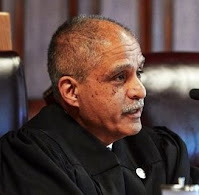
Chief Judge Wilson
Credit: Ryland West/ALM
So, in identifying any transition at New York's highest court coinciding with the elevation of Rowan Wilson as Chief Judge, it might well be instructive to look at any changes in the Court's divided decisions. More specifically, to look at whether there have been changes in who is dissenting and what they are dissenting about. This would, of course, tell us whether there have been changes in who is in the majority and what choices the majority has been making.

Let's get to it.

Reviewing the Court of Appeals decisions over the past few years--concentrating on the latter years under Chief Judge Janet DiFiore through the just-completed first full year under Rowan Wilson--one rather startling change stood out. There has, indeed, been a remarkable change in who has been dissenting and, concurrently, in the choices regularly being made by the majority.
[N.B., this is emphatically NOT about the merits of the changes or about the comparative wisdom, equity, or quality of legal analysis in the dissenting or majority positions. To be sure, I have my own preferences and views. But this is about the facts--the data which, believe me, requires a considerable amount of tedious effort to collect. The Court does not make it easy!]

Judge Cannataro
Credit: Ryland West/ALM
Here it is: while Janet DiFiore was Chief Judge, then-Judge Rowan Wilson dissented regularly. Judge Anthony Cannataro never did. That's right, Wilson, whether writing his own dissenting opinions or joining a dissenting opinion of one of his colleagues, did so frequently. Cannataro, from his appointment to the Court in June 2021 through the last full year of DiFiore's tenure (Fall 2021 through Spring 2022), did not write or vote in dissent even once.

Here's the rest of it: since Wilson has been Chief Judge, Cannataro has been dissenting fairly regularly. In fact, through the first full year of Wilson's tenure as Chief Judge (Fall 2023 through Spring 2024), Cannataro has actually dissented more frequently than Wilson. Again, a startling turnaround.

Here's what that looks like:
(click to enlarge for a better view)
Whether or not this is a welcome development is not the point. Keep in mind that the issues in these appeals that result in divided decisions are close. There are usually strong arguments, legal and policy, on both sides. Unless one chooses to be ideologically blind or otherwise hopelessly biased, the fact is that the Court could legitimately have decided most of these cases either way.

The positions taken and the arguments made in the dissent might well have been the majority at another time with a different composition on the Court. One side might turn out to be wiser or fairer or more in line with the available legal materials. But those views are usually matters of personal or professional opinion and preference. 

Let's take a look at a few illustrative dissents--by Wilson during the final year of the DiFiore era, and by Cannataro during this just-concluded first full year under Wilson.

Even casual followers of the Court are aware of Wilson's dissenting opinion in Nonhuman Rights Project, Inc. v. Breheny (2022) where he disagreed with the majority's rejection of any liberty interest for Happy the Elephant, whose legal representatives sought habeas corpus to free her from the Bronx Zoo. Likewise, for Wilson's dissenting opinion in Harkenrider v. Hochul (2022), where he argued, among other things, that the statistical evidence that the majority relied upon to conclude that the redistricting at issue was unconstitutionally partisan was fatally flawed.

Other dissents display some rather consistent patterns in Wilson's decisional choices. For example, in Cutaia v. Board of Managers (2022), joined by Judges Jenny Rivera and Shirley Troutman, he argued that the worker, who was seriously injured on the job as a result of an inadequate ladder provided by the contractor, was entitled to summary judgment on his state Labor Law claim. Likewise, in Toussaint v. Port Authority (2022), again joined by Rivera and Troutman, Wilson sided with the worker who was seriously injured on the job when he was crushed by a "power buggy" being operated by an untrained driver, in violation of safety regulations of promulgated by the state labor department.

In illustrative criminal cases, Wilson dissented in People v. Dawson (2022), in an opinion joined by Rivera, arguing that the defendant's waiver of Miranda rights, in the absence of counsel which he had requested, was a violation of the Court's traditionally scrupulous protection of due process, the right to counsel and against self-incrimination. And in People v. Ibarguen (2021), again joined by Rivera, argued that the defendant had standing to challenge the warrantless entry and search of his friend's residence where he was a dinner guest.

Several other Wilson dissents, in both civil and criminal cases, share the same inclinations to side with injured workers and to rigorously safeguard the rights of the accused.

As for the Cannataro dissents during Wilson's first full year as Chief Judge, most observers of the Court are aware that he dissented in People v. Weinstein (2024), arguing that the majority erred in holding that the evidence of uncharged misconduct was illegally admitted to prove the defendant's criminal propensity. And in Hoffmann v. New York State Independent Redistricting Commission (2023), he disagreed with the majority's ruling that the urgent redistricting ordered by the DiFiore Court in Harkenrider, to be done by the trial court, was only an interim measure.

Other dissents, like those of Wilson, reveal some common denominators. For example, in Brookdale Physicians v. NYC Department of Finance (2024), in an opinion joined by Judges Michael Garcia and Madeline Singas, he sided with the building owner against the city finance department, arguing that the revocation of the building's tax-exempt status, on the ground that the tenant was a for-profit corporation, was arbitrary and capricious. And in Tax Equity Now v. City of New York (2024), he authored a separate dissenting opinion, disagreeing with the majority's holding that the complainants had sufficiently pleaded a cause of action, under the state's Real Property Tax Law, that the city's property tax system was unfair and favored wealthy residents.

In criminal cases, the common threads are even sharper. For example, in People v. Telfair (2023), in an opinion joined by Garcia and Singas, Cannataro disagreed with the majority's ruling that the evidence of prior bad acts by the defendant constituted inadmissible proof of criminal propensity. In People v. Brown (2023), in an opinion again joined by Garcia and Singas, he disagreed with the majority's ruling that it was a violation of due process to designate the defendant as a sex offender for a robbery, which lacked any sexual act or motive, merely because it took place in the presence of a child.  And in People v. Cuencas (2023), in another dissenting opinion joined by Garcia and Singas, he argued that the majority wrongfully decided that warrantless police entry into the suspect's home was unreasonable because the lower court's "mixed question" determination was to the contrary.

Cannataro's dissents, these few discussed and others, evince inclinations to side with the rights of property and business owners and to be skeptical about seemingly technical obstacles to criminal law enforcement.

Let's conclude with this observation. In all of these cases, whether they involved Wilson or Cannataro dissenting, they were on opposite sides. The positions embraced by Cannataro always coincided with those of the majority while DiFiore was Chief Judge. In the Wilson era, however, the dynamics are different. Indeed, the positions taken by Cannataro coincide with those of the majority less frequently than do those of Wilson--whose positions in the DiFiore era were regularly at odds with the majority.

No doubt about it, there has been a transition at the Court of Appeals, not only in the center seat but also in the Court's general decisional outcomes.

Saturday, July 6, 2024

Part 5, More on Caseload and on Criminal Appeals--NYCOA: The Wilson Uptick

The Court of Appeals remains the focus for now. Yes, dramatic developments at the Supreme Court should and will be addressed. Meanwhile, remember that for New Yorkers, our lives under the law are much more directly and regularly affected by the rulings of our highest court--just as they are for residents of other states and their high courts.

This post will be a review of sorts. We'll look at some of the same matters we did previously in this series, but with some more complete, supplementary data.

Credit:Tania Savayan.Westchester Journal News
In Part 1 of this series, we saw that the Court's overall caseload was already increasing in the very first few months of Rowan Wilson's tenure as New York's Chief Judge. In Part 2, we saw the same when considering only criminal appeals. In Part 3, we saw that the number of criminal appeals calendared continued to increase over the next few months. In Part 4, we compared the caseloads for the first full year of  Wilson's tenure with those of some previous years.

Let's now look at some similar comparisons, again with some supplemental and somewhat different data.

As noted previously, the State Bar News reported that Wilson made clear, at the 2024 Annual Meeting, that he believed that New York's highest court "must dramatically increase its caseload to regain its stature." [https://nysba.org/state-bar-news-annual-meeting-2024/#dflip-df_163552/23/ at 23.] Indeed, he has made no secret about those sentiments and has repeated them frequently. 

To anyone who has been following the Court and, more specifically, the contrast among the Judges in how frequently they have been granting CLAs (Criminal Leave Applications), Wilson's views on the subject should be no surprise. [Recall, the decision to allow a criminal case to be reviewed by the Court is made by the one Judge to whom the CLA was randomly distributed. No other Judge participates in that decision.] Wilson consistently granted the most CLAs of any Judge on the Court during the years when Janet DiFiore was Chief Judge, and he continues to do so.

Let's take a look:
(click to enlarge for a better view)
Considering the two ends of the Court's CLA-granting spectrum during the DiFiore era makes pretty clear which Judges were deciding to afford review of criminal cases by the Court most frequently, and which Judges the least so. Rowan Wilson and Jenny Rivera were the most generous in granting CLAs, and Janet Difiore and Michael Garcia the least so.

Regarding then-Judge Wilson, he granted CLAs the most frequently of any Judge on the Court and far more frequently than DiFiore and Garcia. The result? If a party seeking to be heard at the Court of Appeals had their CLA distributed to Wilson, there was a far greater chance of having their application granted. If their CLA was distributed to DiFiore or Garcia, the chances of getting a hearing at the Court were minimal. [The manifest unfairness of this state of affairs has been a source of much debate about whether to change the CLA process. See e.g., former Judge Eugene Pigott's Criminal Leave in the Court of Appeals a Case of Implicit Bias?, 85 Albany Law Review 169 (2021-2022).]

The contrast in the CLA-granting figures among the Judges was much the same for the next two calendar years--i.e., for 2022 through 2023, the most recent full calendar years. Let's take a look:
(click to enlarge for a better view)
The composition of the Court had changed by the time of these calendar years. Chief Judge DiFiore left the Court in mid-2022. Judges Madeline Singas and Anthony Cannataro were both appointed in mid-2021 and, so, they were on the Court throughout 2022 and 2023. Judge Shirley Troutman was appointed in early 2022 and participated in CLA decision-making throughout 2023. (The figure for Troutman reflects only 2023.) But notwithstanding the compositional changes at the Court, the CLA-granting spectrum was similar to that of the preceding years. Some Judges were granting significantly more than others.

As in those previous years, Judge Garcia granted the fewest CLAs. Now-Chief Judge Wilson granted the most. To put the contrast in perspective, consider that a party that sought review by the Court of Appeals had a nearly eight times better chance of having their CLA granted if it was distributed to Wilson than if their application were to be decided by Garcia. A party would have a more than three times better chance with Wilson than with Singas or Cannataro.

Has Wilson's obvious preference for the Court to accept more cases to review been reflected in the caseload since he was elevated to be Chief Judge? For now, let's keep our focus on criminal appeals. (For additional perspective, I've included the final Fall to Spring year under Chief Judge Jonathan Lippman.) Take a look:
(click to enlarge for a better view)
As we've seen previously, the number of criminal appeals calendared under Chief Judge Wilson--Fall 2023-Spring 2024--increased significantly from the number calendared in the previous years. This is true for the period while Difiore was Chief Judge and while Cannataro was Acting Chief. Fifty-one calendared criminal appeals to an average of twenty-nine. To be sure, that's still considerably fewer than the eighty-two criminal appeals calendared under Lippman. But it is a substantial 75% increase from the immediately preceding years before Wilson was Chief.

Not surprisingly, an analogous development has been taking place for total appeals calendared--both civil and criminal. Take a look:
(click to enlarge for a better view)
The total appeals calendared at the Court under Chief Judge Wilson has increased similarly. An almost 50% increase from what the numbers had been in the immediately preceding years. Again, the caseload thus far in the Wilson era does not (yet?) approximate that under Chief Judge Lippman. It is still much lower than it was under Lippman--i.e., 180 in Lippman's final Fall to Spring year. But the increase of at least 30 appeals under Wilson, from what it was when DiFiore was Chief Judge and Cannataro was Acting Chief, is hardly insignificant.

Notably, there has been no decrease in civil appeals calendared under Wilson in order to keep the total number of appeals down to where it had been in the immediately previous years. Simple arithmetic--subtracting the number of criminal appeals calendared from the number of total appeals--tells us that.  The number of civil appeals calendared in the years immediately preceding Wilson's elevation to Chief Judge averaged about 40. In the first full year of calendaring under Wilson, there were over 50 calendared civil appeals. The Court's caseload is growing--period.

Where the caseload at New York's highest court goes from here is anyone's guess. But a good guess is that the caseload, both criminal and civil, will continue to be quite higher than it was before Wilson became Chief. He has left no doubt that he believes the Court's stature demands that, and that New Yorkers' worthy cases deserve that.


Next up--yes, finally--who's dissenting now!

Saturday, May 25, 2024

Part 4, Update and More on Criminal Appeals--NYCOA: The Wilson Uptick

In Part 1 of this series, we looked at the first 4 months of Rowan Wilson's tenure as New York's Chief Judge and saw a 45% increase in total appeals calendared over the corresponding period the previous year. In Part 2, we saw that the number of criminal appeals calendared had actually doubled. In Part 3, we saw that the number of criminal cases calendared continued to increase dramatically through the next 3 months--nearly double the number for the same 7 months the previous year.

        (click to enlarge for a better view) 
Former Chief Judge Lippman with Chief Judge Wilson
at the 2024 Lawrence Cooke Symposium,
Albany Law School, April 25
(Several graphs in those previous posts depicted the comparisons of the early-Wilson era with that of the pre-Wilson months and with the corresponding months of Chief Judge Jonathan Lippman's final year. In short, criminal appeals rose sharply under Wilson, but not nearly at the level when Lippman was Chief Judge. 
The graphs also depicted Wilson's record of granting CLAs [Criminal Leave Applications] as the highest on the Court, both before and after he became Chief Judge. But, again, Wilson's record is still far below that of several members of the Court when Lippman was Chief Judge--including that of Lippman himself.) 

Let's now look at the caseload for the first full year of calendars with Wilson as Chief Judge. This would include the cases calendared for the Court's sessions from September 2023 until the Court's coming summer break this year.  And let's compare that to the caseloads of the corresponding previous full year of calendars--all set prior to Wilson becoming Chief Judge--and the corresponding full year of calendars during Lippman's final year before mandatory retirement. Here's what that looks like:

(click to enlarge for a better view)
As shown in the graph, total criminal appeals calendared in the first full Wilson year increased significantly over the previous year--76% increase. Despite this increase, however, the number is still far smaller than during the corresponding fall-to-spring term while Lippman was Chief Judge. To be clear, the point is not the more the better or that there is some ideal number. What is clear, however, is that the Court's criminal caseload did drop rather drastically from what it was in the Lippman era, and that the caseload is now increasing--if not as dramatically, certainly significantly.

As for the total number of cases calendared, civil as well as criminal, the roller coaster is similar. Take a look:
(click to enlarge for a better view)
As depicted in the graph, the total number of appeals calendared at the Court had dropped to less than one half--only 39% --of what it was under Lippman. In the first full fall-to-spring year under Wilson, the caseload has increased 47%. Still, it is a long way from the Lippman caseload, but unmistakenly a considerable rise.

This increase under Wilson is not surprising. He has made clear his belief that New York's highest court should be hearing more cases as part of "returning the court to its former glory. 'I would like to get back to that,' he said." [State Bar News/Annual Meeting 2024.]
He expressed similar sentiments at the Chief Judge Lawrence Cooke Symposium at Albany Law School last month. [The Eminence and Experience--and Exhaustion--of Being New York's Chief Judge, April 25, 2024. (See photo above.)]

Beyond that, regarding the criminal cases, Wilson's record for granting CLAs [Criminal Leave Applications] has rather consistently been the highest on the Court. It was so, for example, in the last two years of the Court under his predecessor, Chief Judge Janet DiFiore. Take a look:

(click to enlarge for a better view)
As shown on the graph, Wilson's average of granting 8.5 CLAs each year was the highest in the final years of DiFiore's tenure.
(Notably, among the five Judges who were on the Court for the entirety of those last two years, the contrast was stark: from Wilson's 8.5 to DiFiore's and Garcia's 1.5. Obviously, those parties whose CLAs were assigned to Wilson were far more fortunate than those assigned to DiFiore or Garcia.)

Wilson's record for granting the most CLAs--and the stark contrast among the Judges--continued after DiFiore left the Court. Here is what the first post-DiFiore year looked like:

(click to enlarge for a better view)
Once again, Wilson's record for granting CLAs was the highest among the Judges.
(Notably also, both his record and the Court's average jumped quite a bit in that immediate post-DiFiore year. Judges Rivera's, Cannataro's, and Troutman's records all contributed to the doubling of the Court's average. And as was the case while DiFiore was Chief Judge, the contrast among the Judges' records remained quite extraordinary. From Wilson's high of 17 CLA grants to Garcia's 1. Again, parties whose CLAs were assigned to Wilson--or to Rivera, Cannataro, or Troutman--had a much better chance for the opportunity to have their cases reviewed by the Court than if their CLAs were assigned to Garcia. This imbalance, the result of the single-Judge CLA decision-making process, has been the subject of much criticism. See, e.g., Eugene F. Pigott Jr., Criminal Leave in the Court of Appeals a Case of Implicit Bias?, 85 Albany Law Review 169 [2021-2022])

To continue the aside about the imbalance resulting in CLA-granting records, it should be made clear that this is not a recent phenomenon--not a result of Janet DiFiore being Chief Judge or of her departure. This has been a long-term feature of the single-Judge CLA decision-making process. For example, the contrast was just as great while Judith Kaye was Chief Judge. Take a look:

(click to enlarge for a better view)
As depicted in this graph [from (Part 3) NY Court of Appeals: Criminal Leaves Still Up & Still Uneven.], among the Judges who were on the Court for the entire last two years of Kaye's tenure as Chief Judge, the CLA-granting records ranged from Pigott's annual average of 11 to Read's average of 1.5.  As for the Court as a whole, CLA grants then doubled in the following years under Chief Judge Lippman from what it had been under Kaye. Here's a look at Court averages for total CLA grants over the years:

(click to enlarge for a better view)
As depicted in this graph [from NY Court of Appeals: Steep Cut in Criminal Cases (part 2).],the CLA grants during both the Wachtler and Lippman eras at the Court were double that of the latter 10 years of the Kaye era.

This is a long way of saying that, regarding CLA grants, there has been a contrast among the Chief Judge tenures just as there has been among the individual Judges themselves. With the criminal caseloads now increasing under Wilson, and his consistent record of granting the highest--or one of the highest--numbers of CLAs among the Judges, there is good reason to believe that parties seeking appeals in criminal cases will have an increased opportunity to have their cases heard by New York's highest court with Wilson as Chief Judge.


In the next post, we'll look at a significant change--actually a turnaround--in who's now dissenting at the Court of Appeals.

Being Chief Judge with Rowan Wilson and Jonathan Lippman

The Eminence and Experience
--and Exhaustion--
of Being New York's Chief Judge
The 14th Annual Chief Judge Lawrence H. Cooke Symposium
Albany Law School, April 25, 2024

Sunday, April 21, 2024

Part 3, More on Criminal Appeals--NYCOA: The Wilson Uptick

In Part 1 of this series, we saw that the number of cases calendared for a hearing at the Court of Appeals in the first 4 months since Rowan Wilson became New York's Chief Judge increased significantly. A 45% increase over the same 4 months the previous year. In Part 2, we saw that the number of criminal cases calendared for oral arguments for the same 4 months had actually doubled. 

Let's now look more broadly at the changing criminal caseload at New York's highest court under Rowan Wilson.

Source: Office of Governor of New York/
Darren McGee via AP
First, has the increase continued? Since we looked at the calendared criminal appeals in Part 2, three additional full months have been calendared under Chief Judge Wilson. February, March and April of 2024 have been added to the four previous months since Wilson has been responsible for the Court's calendar. So, now, let's compare the seven months of calendars under Wilson--i.e., the seven calendars from September 2023 through April 2024. [N.B., as usual, no oral arguments were calendared for Decenber.]

Under Wilson, the number of criminal cases calendared has continued to increase dramatically. It has nearly doubled as compared to the number for the same months the previous year before Wilson became Chief. For Wilson's first seven calendars, 47 criminal appeals were scheduled for argument. For the previous year, the number for the corresponding seven months was 25. That's an 89% increase.

Lest the Wilson increase be deemed excessive, it should be noted that for the corresponding final seven months of calendars under Chief Judge Jonathan Lippman--i.e., September 2014 - April 2015--the number was 68. Here's how those numbers look:
(click to enlarge for a better view) 

Similarly, the total number of appeals--civil and criminal--has also increased significantly, albeit not as dramatically, under Wilson. For those same seven months of calendars, the total number of appeals calendared for oral arguments increased from 64 prior to Wilson's elevation to 93 thereafter--a 45% increase. Again, lest that increase be deemed excessive, the corresponding number under Chief Judge Lippman was 152! Here's how those numbers look:
(click to enlarge for a better view) 

Returning to criminal appeals, the increase is no doubt largely attributable to Chief Judge Wilson's own view that the Court should be hearing more criminal appeals than it had been in the recent past. This is clearly evinced in his record in granting Criminal Leave Applications.
[For those unfamiliar with Court of Appeals procedures: These CLA's are distributed equally among the Judges. And whether to grant or deny an appeal--i.e., whether to allow the criminal case to be reviewed by the Court--is the sole decision of the one Judge to whom the CLA happened to be distributed. No other Judge participates in that decision.]

Since Rowan Wilson has been a member of the Court, he has consistently been granting a much higher number of CLA's than most of his collegues. For example, in the final three years under his predecessor, Chief Judge Janet DiFiore, Wilson averaged granting 10 criminal cases a review each year. At the other end of the spectrum, Judge Michael Garcia averaged less than 1 grant a year.

Here's how the numbers look for the four Judges who were on the Court for the entire final three year period under DiFiore--September 2019 through August 2022:
(click to enlarge for a better view)

As the graph shows, Wilson had been granting 5 times as many CLA's as Chief Judge DiFiore, and 10 times as many as Judge Garcia. Moreover, Wilson's record has remained the same in the post-DiFiore era. Indeed, for the the last 12 months for which CLA numbers are available, March 2023 through February 2024, he has remained the most generous among his colleagues in granting review. Take a look at the records of the six Judges who have been on the Court for all of these these recent 12 months:
(click to enlarge for a better view)

As the graph shows, Wilson again granted 10 times more CLA's than Judge Garcia. He also granted 5 times more than Judges Madeline Singas and Anthony Cannataro.

Finally, for one more time, lest it be thought that Wilson's record of granting CLA's has been excessive, let's compare his record during the DiFiore era with that of the Judges on the Court under Chief Judge Lippman. Here are the individual CLA records for the final three years of both eras. Take a look:
(click to enlarge for a better view)

Credit: Nathaniel Brooks for The New York Times
The graph displays the records of the Judges who were members of the Court for all three of the final years of the Lippman Court and the corresponding Judges of the DiFiore Court. As the graph makes clear, Wilson's record of granting 10 CLA's a year, although considerably higher than that of his colleagues on the DiFiore Court, would have been quite modest on the Court under Lippman. While his record of granting review was 5 times higher than that of Chief Judge DiFiore (2 average grants), it was less than one half that of Chief Judge Lippman (21 average grants).

Whether Chief Judge Wilson's record of granting CLA's is ideal, too high, or too low is not the point.
(I acknowledge my own view that some of his colleagues have been far too stingy, and that it is better for the Court and far fairer for the litigants and their clients to be allowed a hearing before the state's highest tribunal.)

But whatever is wiser or fairer, the facts are that Wilson has been considerably more generous than most of his colleagues in granting the right to have criminal appeals heard by the Court, and the Court under his leadership has been hearing significantly more criminal appeals than it had in recent past years. No, not as many as were being heard under Chief Judge Lippman. But many more than under Wilson's immediate predecessor, Chief Judge DiFiore.

Next, we'll look at changes in who's been dissenting at the Court, and how the Court has been deciding those divided cases.

Saturday, December 16, 2023

NYCOA: Takeaways from the New Redistricting Decision

This past week, New York's highest court, in a 4-3 decision in Matter of Hoffman v. NYS Independent Redistricting Commission, ordered the state's bipartisan Independent Redistricting Commission (IRC) to reconvene and to redraw the state's congressional districts. There's much to be said about that decision, both legally and politically.
(click to enlarge for a better view)
Presumably, only a few Court junkies (myself included), the participating lawyers, legal reporters covering the case, the Court's Judges and their clerks, and some diverse others have actually read the 60 pages of judicial opinions. So it might be worthwhile to highlight some of the important--and interesting--takeaways from this case. Here is my own subjective and (out of mercy for my readers) incomplete list.

First, the decision itself and the context:
Last year, the Court, in Matter of Harkenrider v Hochul, declared that the Democratic-controlled state legislature had engaged in partisan gerrymandering, which is explicitly prohibited by the state constitution's 2014 amendment. As a remedy, the Court's 4-3 majority in that case returned the matter to the trial court where the case had commenced, and ordered the trial judge to redistrict the state in time for the upcoming 2022 elections. That upstate Republican judge did so, with the help of a "special master" (a statistician), drawing a purportedly partisan-neutral map for the state's 26 congressional districts.
(click to enlarge for a better view)
The legislature's map that the Court of Appeals had invalidated might well have favored the Democrats to gain as many as six congressional seats. But the trial judge's map resulted in the Republicans flipping four seats from the Democrats, creating a slimmer Democratic majority of 15 to 11.

The Democrats then brought this lawsuit. They argued that the trial judge's map was only a temporary emergency remedy for the fast-approaching 2022 elections; that it was not a more permanent map to last for the remainder of the ten years until the next federal census. As the case proceeded through the state's court system, the intermediate appellate court (the Appellate Division, Third Department) agreed with the Democrats in a 3-2 decision, and the 4-3 Court of Appeals has now agreed as well. In contrast to last year's Harkenrider decision, New York's high court in this year's Hoffman decision ordered the Independent Redistricting Commission (IRC) to do its state constitutional duty and create a redistricting map.

Takeaways from the Decision:
  • The Democrats Win.     The Democratic senators got what they wanted. They will now get a new redistricting which, almost certainly, will be an improvement for them compared to the trial judge's map last year. Recall that, earlier this year, the Democratically-controlled state senate had (shamefully) rejected Governor Hochul's first nominee for Chief Judge, Appellate Division Presiding Justice Hector LaSalle. Subsequently, after the Judicial Nominating Commission sent the Governor a new--and very different--list of candidates, the Democratic majority approved her second nominee, their much-favored then-Judge of the Court of Appeals, Rowan Wilson (who--even more shamefully--was left out of the Commission's first list to the Governor). Wilson had forcefully dissented from the Court's redistricting decision in Harkenrider last year and, now as Chief Judge, he has authored the Court's majority Hoffman decision, holding that the previous redistricting by the trial judge was only a temporary measure. The Democrats' political maneuvering has little to do with the legal and constitutional merits of this new decision. But it certainly has major political implications.
  • The IRC, Not A Trial Judge     Wilson's opinion for the majority in this past week's Hoffman decision emphasized the limited role that the judiciary is supposed to play in congressional redistricting. Under the state constitution, it is the IRC--with some legislative modification allowed--that has the authority and duty for redistricting. With that in mind, especially considering the context of last year's Harkenrider decision with elections fast approaching, the redistricting performed by the trial judge, as directed by that decision's majority, could only be viewed as a temporary emergency measure, according to Chief Judge Wilson. It was not a more permanent decade-long redistricting. The IRC must now draw that more permanent map.
  • Stare Decisis?     According to the dissenting opinion this past week in Hoffman--authored by a clearly angry Judge Anthony Cannataro, who was part of the 4-3 majority in last year's Harkenrider decision--"stare decisis does not permit the majority to overturn our precedent merely because they would decide the case differently now than we did then." [My emphasis.] With all due respect to the dissenters, last year's Harkenrider decision was not a precedent for deciding this year's case. The substantive constitutional issue in this year's Hoffman case was very different. It was not about whether the Democrat's previous redistricting map amounted to invalid partisan gerrymandering. Nor was it about the validity of the Court of Appeals' remedy at that time--i.e., sending the case back to the trial judge to do a quick redistricting that would be ready for the fast-approaching elections. Rather, the case just decided in Hoffman was about whether the remedy ordered last year was a temporary emergency one, or a more permanent decade-long one--i.e., one that entirely superseded the constitutionally assigned duty of the IRC until the next 10-year redistricting. Whether the Wilson majority or the Cannataro dissenters got that question right, it was a very different issue than the ones that were decided in last year's case. 
  • The Change in Composition Did It?     Also, according to the dissenting opinion, "the majority is able to reach this result for one reason only: because the composition of the Court has changed." [My emphasis.] Well, the composition of the Court has indeed changed. Former Chief Judge Janet DiFiore resigned and Rowan Wilson--who was on the opposite side of last year's redistricting decision--has replaced her. Also, Presiding Appellate Division Justice Dianne Renwick was vouched onto the Court to fill in for Judge Caitlin Halligan, who had recused herself from the case. So yes, the composition was different. But, as with the previously discussed complaint of the dissenters, this one misses the mark. It has partisan political appeal, but it has nothing to do with the actual legal and constitutional merits of this past week's Hoffman decision--which, again, involved a very different constitutional issue.
  • The Exigencies in 2022     Related to the previous three items, both the majority and the dissenters in this past week's Hoffman decision recognized that last year's redistricting, created by a trial judge, had been ordered by the Court of Appeals in Harkenrider because of the urgent circumstances of the fast-approaching elections. As Chief Judge Wilson's majority opinion in Hoffman explained, the Court last year had
    concluded that 'judicial oversight [wa]s required to facilitate the expeditious creation of constitutionally conforming maps for use in the 2022 election'...[The Court] then remitted the matter to Supreme Court [i.e., the state trial judge] to adopt, with the assistance of a special master, constitutional maps 'with all due haste'...Less than a month later, Supreme Court [i.e., again, the state trial judge] certified the maps prepared by a special master as 'the official approved 2022 Congressional map.' [My emphasis.]
    Similarly, in Judge Cannataro's opinion this past week, the dissenters themselves actually explained that, "[i]n [last year's decision in] Harkenrider, this Court determined that it was required to order the adoption of maps as a constitutional remedy for a variety of reasons, including...the exigencies created by the impending 2022 elections." [My emphasis.] Attempting to minimize the "exigencies" as underlying the Court's decision last year, the dissenters actually reinforced that very factor. In the dissenting opinion's own words: "This Court’s opinion necessarily referenced the impending 2022 election at various intervals. However, such references served only to clarify that the remedy would not be postponed until after the 2022 elections." [My emphasis.] None of the foregoing necessarily demonstrates that the majority or the dissenters were right about the substantive merits of this year's Hoffman decision. But it does show unequivocally that the Court's Harkenrider decision last year, to return the case to a trial judge to perform the redistricting, was, indeed, an emergency measure.
  • The Constitutionally Limited Judicial Role (A)    Underlying the Wilson majority's conclusion in Hoffman, that the trial judge's redistricting last year must have been a temporary measure dictated by the urgency of the upcoming elections--and not a more permanent substitution for the IRC's role--are several relevant state and federal constitutional prescriptions. As for the New York state constitution, the 2014 Amendment states quite plainly that "an independent redistricting commission shall be established to determine the district lines for congressional and state legislative offices” (NY Const, art III, § 5-b [a]). [My emphasis.] Additionally, addressing a potential role for the courts, that same amendment also provides that "The [IRC] process for redistricting congressional and state legislative districts...shall govern redistricting in this state except to the extent that a court is required to order the adoption of, or changes to, a redistricting plan as a remedy for a violation of law. (NY Const, art III, § 4 [e]. [My emphasis.] The trial judge's redistricting, ordered last year in Harkenrider, might have been the "extent" "required" to remedy partisan gerrymandering in time for the approaching 2022 elections. The majority's argument this past week in Hoffman is that such an "extent" is hardly required any longer, because there is plenty of time for the IRC to perform its constitutional duty before the 2024 congressional elections.
  •  Constitutionally Limited Judicial Role (B)    Regarding the federal constitution, it too prescribes a limited role for state courts in the redistricting process. The "Elections Clause" (Article I, Section 4) places the authority for determining congressional districts in the state legislatures: "The Times, Places and Manner of holding Elections for Senators and Representatives, shall be prescribed in each State by the Legislature thereof." [My emphasis.] In its 2015 decision in Arizona State Legislature v. Arizona Independent Redistricting Comm'n, the Supreme Court ruled that an independent commission, established in a state constitutional amendment approved by the voters, can validly do the redistricting work as well. So, a state's legislature or a state's redistricting commission may do the work. The dissenters in this week's Hoffman decision relied on another Supreme Court decision, Moore v. Harper, decided earlier this year, for the proposition that--as the dissenters paraphrased it--"while redistricting may traditionally be a legislative function, state courts are the appropriate tribunals to hold state legislatures to compliance with state constitution redistricting requirements." Yes, but in the Supreme Court's own words, the holding was simply that "whatever authority was responsible for redistricting [i.e., state legislature or commission], that entity remained subject to constraints set forth in the State Constitution." [My emphasis.] And more to the precise point here, making clear that state courts were not the ones to do the redistricting themselves, the Supreme Court emphasized that, 
     Although we conclude that the [federal constitution's] Elections Clause does not exempt state legislatures from the ordinary constraints imposed by state law, state courts do not have free rein...We hold only that state courts may not transgress the ordinary bounds of judicial review such that they arrogate to themselves the power vested in state legislatures to regulate federal elections. [My emphasis.]
Again, a limited role for the state courts, and one that surely does not seem to include "arrogat[ing] to themselves the power" of performing the redistricting themselves--like the trial court was ordered to do in the Court of Appeals' Harkenrider decision last year.

I'll spare my readers and stop here. Those were the essential highlights I took away from the Court of Appeals' redistricting decision this week in Hoffman. Other commentators might well select their own different highlights and take issue with mine.

One additional takeaway which we'll consider in the next post, continuing the NYCOA: The Wilson Uptick series, has to do with who is suddenly been dissenting since Rowan Wilson became Chief Judge.

Monday, December 11, 2023

Part 2, Criminal Appeals--NYCOA: The Wilson Uptick

We previously looked at the increase in cases being heard at New York's highest court since Rowan Wilson was elevated to Chief Judge this past April and, more specifically, since he began producing the Court's calendars starting with this September's. We saw that the increase has already been half-again what it was previously. That is so whether the several Wilson calendars thus far produced are compared to those produced immediately before he became Chief or to the calendars for the same several months one year earlier. (See NYCOA: The Wilson Uptick.)

Now let's focus on criminal appeals, a source of particular concern the last few years--just as it had been prior to Jonathan Lippman's appointment as Chief Judge in 2009. (See e.g., NY Court of Appeals: Granting Criminal Appeals--Up, Down, Now Up Again? (Part 9: Significant Increase in 2009)) Similar to what we saw in the increase in the Court's schedule of cases generally, there has been an increase in the number of criminal appeals on the Court's calendar. In fact, the increase has been even more significant. It has doubled from what it was a year ago.

Source: Office of Governor of New York/
Darren McGee via AP
As noted in the previous post, even though Wilson was appointed Chief Judge in April, the May calendar of this year indicates that it had already been prepared in March. That means that the first calendars prepared under Wilson are those for the September, October, and November sessions of this year, and the January session of next. As we did with the totals for all cases, civil and criminal, let's compare the number of criminal appeals in these first four Wilson calendars with the pre-Wilson number for the immediately preceding four months, as well as with the pre-Wilson number for the same four months one year ago. For perspective, we'll again include the number for the last four months under Chief Judge Jonathan Lippman in 2015.


Here's what those comparisons look like:
(click to enlarge for a better view)

As depicted in the graph, the number of criminal appeals calendared under Chief Judge Wilson (26) is double the number from the same months one year ago (13); and more than half-again the number for the months immediately preceding the first Wilson calendars (16). To place these numbers in perspective, lest it be thought that the Wilson increase is too much too soon, note the number of criminal appeals in the last four months under Chief Judge Lippman (52)--twice that thus far under Wilson, and four times that from pre-Wilson one year ago.

Credit: Nathaniel Brooks for The New York Times
Related to that last note, lest it be thought that the criminal caseload under Lippman was a historic anomaly, it was actually in keeping with what had been the Court of Appeals' customary output of criminal decisions. Criminal appeals heard by the Court had dropped in the years immediately preceding Lippman's appointment as Chief Judge, and it dropped again after his mandatory retirement. (Remember: New York's moronic law that mandates the retirement of Court of Appeals Judges at the age of 70.)

Here's what that roller-coaster before, during, and after Lippman looked like:
(click to enlarge for a better view)
(Previously prepared for

As reflected in the graph, the criminal caseload doubled when Lippman became Chief Judge from what it had been in the last several years under Chief Judge Judith Kaye. It dropped precipitously again under Chief Judge Janet DiFiore. But the criminal caseload under Lippman was actually much more in line with what it had been in the early years of Kaye's tenure and with what it had been before that under Chief Judge Sol Wachtler. The point being that the 26 criminal cases in the first four monthly calendars under Wilson, which would amount to a criminal caseload of 78 cases for twelve months, is far from an excessive number when viewed in context.

In the next post in this series, we'll look at Criminal Leave Applications. Specifically, we'll look at how many CLA's each of the Judges has been granting. A not-surprising hint: some Judges grant many more than others.

Saturday, November 25, 2023

NYCOA: The Wilson Uptick

 Yikes! It's been a few months. First, it was severe neck trauma that kept me totally out of commission for a while, and since then it's been zealously catching up on delayed deadlines and postponed commitments. Now, for better or worse, I'm back!

There's lots to address about both the Supreme Court and New York's high court, the Court of Appeals. Let's begin with the latter. Specifically, let's take a look at a few developments since Rowan Wilson was elevated to Chief Judge this past April.

There has been an unmistakable increase in the Court's caseload. The dramatic drop in the number of cases that the Court was accepting and deciding in the previous several years was a source of widespread commentary. Most of it extremely critical. But whatever the assessment of that development, there could be no doubt that the caseload had indeed been reduced and that the reduction was dramatic--even drastic.

(NYS Senate Media Services)
Currently, with Wilson at the helm, the size of the caseload is changing again. It's on the rise. And the increase is more than a blip.
[All the data relied upon here are from the monthly calendars published by the Court itself, accessible at https://www.nycourts.gov/ctapps/.]

Contrasting the numbers from before and after Wilson became Chief Judge makes that clear. Consider the Court's monthly oral argument calendars prepared since Wilson has been presiding, and compare those with the calendars for the very same months the previous year. Thus far, the Court under Wilson has produced calendars for the September, October, and November sessions of this year, and the January session of next. Let's contrast those calendars with those produced for the same months a year earlier.

First, for the four monthly pre-Wilson calendars, there were a total of 35 cases on the schedule. That is, for September 2022 there were 10 cases scheduled; for October of that year there were 8; for November, also 8; and for January 2023 there were 9.

One year later, with Wilson as Chief Judge, the total jumped to 51. That is, 13 oral arguments were scheduled for this past September; 13 again for October; 11 for November; and 14 have already been scheduled for this coming January. 

That's a 45% increase. Chief Judge Wilson has been unequivocal that he believes the Court should be taking and deciding more appeals than it had been. In the several months since he was appointed to the Court's center seat, the Court seems to be moving in that direction.

Now, to be sure, that increase only tells us what the change has been from a year ago to the present. It does not tell us whether the Court's caseload was already beginning to increase in the months immediately prior to Wilson's elevation. That is, whether the caseload reflected in the final few calendars prepared before Wilson became Chief would reveal that an increase was already underway. Those calendars would be the ones for the months just prior to the Court's summer break this year--i.e., February, March, April, and May of 2023. [N.B., even though Wilson was appointed Chief Judge in April, the May calendar indicates that it had already been prepared in March.]

Here are the figures for those immediately-pre-Wilson calendars: in February 2023, there were 9 cases; in March, also 9; in April, 11 cases; and 6 for May. That's a total of 35.  The very same as the caseload for the 4 months a year ago. Hence, they indicate the very same 45% jump in the first 4 monthly calendars prepared under Chief Judge Wilson.

(Skip Dickstein/Times Union)
One last point on this Wilson uptick. Although it is significant, it does not (yet?) return the Court to the kind of caseload brought about under Chief Judge Lippman. He, like Wilson, believed the Court should be taking and deciding more appeals than it had been before he was appointed--most notably for Lippman, more criminal appeals.

For the last four monthly calendars prepared under Lippman, here are the figures: June 2015, 19 appeals; September, 26 appeals; October, also 26; and November, the last calendar under Lippman, 12. That's 84 appeals heard in the last four monthly calendars under Lippman.

Here's what the Lippman to early-Wilson figures look like:
(click to enlarge for a better view)

As depicted in the graph, that total of 84 appeals calendared over the last four months under Chief Judge Lippman means that the Court's caseload was eventually reduced to less than one-half after his retirement--i.e., reduced to 35. It also means that the Court under Wilson--with 51 appeals scheduled over four months--still has quite a bit to go if it is going to return to the Lippman caseloads. That's a big if.

The answer to that question depends on how much Chief Judge Wilson actually wants to increase the Court's caseload and, of course, how much his colleagues are interested in doing the same. They--individually in criminal leave applications and collectively in civil motions for appeal--will ultimately be deciding.

In the next post, we'll focus on criminal appeals, first on cases actually calendared and then on Criminal Leave Applications. Regarding the latter, we'll be looking, as we have in the past, at which Judges have been more willing to grant these requests to appeal in criminal cases, and which Judges have been less so.