Showing posts with label Troutman_Shirley. Show all posts

Wednesday, July 10, 2024

Part 6, Who's Dissenting?--NYCOA: The Wilson Uptick

Dissents, both opinions and votes, are particularly revealing. As I've explained numerous times on New York Court Watcher [See e.g., NYCOA: Criminal Appeals (Part 3)--Voting & Decisional Patterns (Mar. 13, 2019)] and elsewhere [See e.g., Great Dissents: 'Matters of High Principle' at the Court of Appeals, 94 N.Y. ST. B.J.  at 23 (Nov./Dec. 2022)]--and as judicial scholars have long understood--these open disagreements with the majority are invaluable in providing insights into the policies, principles, preferences, philosophies, etc. of the dissenters and of the court's majority. Choices have been made. These choices become apparent when the options are spelled out in the dueling majority and dissenting opinions. Beyond that, over a series of divided decisions, the choices made reveal patterns or, in Cardozo's phrase, "stream[s] of tendency."

These revelations, patterns, or "streams," are, of course, valuable not only to judicial scholars. They are also helpful, indeed indispensable, to lawyers who ought to understand the courts and judges before whom they are arguing. Likewise for citizens who wish to be informed about the same. And at least as vitally important, for the judges themselves who--as Cardozo, Holmes, and others among our finest jurists have recognized--are often unaware of their own leanings, deep-seated values and biases, and judicial philosophies.
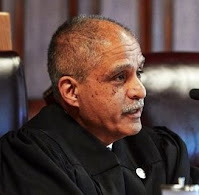
Chief Judge Wilson
Credit: Ryland West/ALM
So, in identifying any transition at New York's highest court coinciding with the elevation of Rowan Wilson as Chief Judge, it might well be instructive to look at any changes in the Court's divided decisions. More specifically, to look at whether there have been changes in who is dissenting and what they are dissenting about. This would, of course, tell us whether there have been changes in who is in the majority and what choices the majority has been making.

Let's get to it.

Reviewing the Court of Appeals decisions over the past few years--concentrating on the latter years under Chief Judge Janet DiFiore through the just-completed first full year under Rowan Wilson--one rather startling change stood out. There has, indeed, been a remarkable change in who has been dissenting and, concurrently, in the choices regularly being made by the majority.
[N.B., this is emphatically NOT about the merits of the changes or about the comparative wisdom, equity, or quality of legal analysis in the dissenting or majority positions. To be sure, I have my own preferences and views. But this is about the facts--the data which, believe me, requires a considerable amount of tedious effort to collect. The Court does not make it easy!]

Judge Cannataro
Credit: Ryland West/ALM
Here it is: while Janet DiFiore was Chief Judge, then-Judge Rowan Wilson dissented regularly. Judge Anthony Cannataro never did. That's right, Wilson, whether writing his own dissenting opinions or joining a dissenting opinion of one of his colleagues, did so frequently. Cannataro, from his appointment to the Court in June 2021 through the last full year of DiFiore's tenure (Fall 2021 through Spring 2022), did not write or vote in dissent even once.

Here's the rest of it: since Wilson has been Chief Judge, Cannataro has been dissenting fairly regularly. In fact, through the first full year of Wilson's tenure as Chief Judge (Fall 2023 through Spring 2024), Cannataro has actually dissented more frequently than Wilson. Again, a startling turnaround.

Here's what that looks like:
(click to enlarge for a better view)
Whether or not this is a welcome development is not the point. Keep in mind that the issues in these appeals that result in divided decisions are close. There are usually strong arguments, legal and policy, on both sides. Unless one chooses to be ideologically blind or otherwise hopelessly biased, the fact is that the Court could legitimately have decided most of these cases either way.

The positions taken and the arguments made in the dissent might well have been the majority at another time with a different composition on the Court. One side might turn out to be wiser or fairer or more in line with the available legal materials. But those views are usually matters of personal or professional opinion and preference. 

Let's take a look at a few illustrative dissents--by Wilson during the final year of the DiFiore era, and by Cannataro during this just-concluded first full year under Wilson.

Even casual followers of the Court are aware of Wilson's dissenting opinion in Nonhuman Rights Project, Inc. v. Breheny (2022) where he disagreed with the majority's rejection of any liberty interest for Happy the Elephant, whose legal representatives sought habeas corpus to free her from the Bronx Zoo. Likewise, for Wilson's dissenting opinion in Harkenrider v. Hochul (2022), where he argued, among other things, that the statistical evidence that the majority relied upon to conclude that the redistricting at issue was unconstitutionally partisan was fatally flawed.

Other dissents display some rather consistent patterns in Wilson's decisional choices. For example, in Cutaia v. Board of Managers (2022), joined by Judges Jenny Rivera and Shirley Troutman, he argued that the worker, who was seriously injured on the job as a result of an inadequate ladder provided by the contractor, was entitled to summary judgment on his state Labor Law claim. Likewise, in Toussaint v. Port Authority (2022), again joined by Rivera and Troutman, Wilson sided with the worker who was seriously injured on the job when he was crushed by a "power buggy" being operated by an untrained driver, in violation of safety regulations of promulgated by the state labor department.

In illustrative criminal cases, Wilson dissented in People v. Dawson (2022), in an opinion joined by Rivera, arguing that the defendant's waiver of Miranda rights, in the absence of counsel which he had requested, was a violation of the Court's traditionally scrupulous protection of due process, the right to counsel and against self-incrimination. And in People v. Ibarguen (2021), again joined by Rivera, argued that the defendant had standing to challenge the warrantless entry and search of his friend's residence where he was a dinner guest.

Several other Wilson dissents, in both civil and criminal cases, share the same inclinations to side with injured workers and to rigorously safeguard the rights of the accused.

As for the Cannataro dissents during Wilson's first full year as Chief Judge, most observers of the Court are aware that he dissented in People v. Weinstein (2024), arguing that the majority erred in holding that the evidence of uncharged misconduct was illegally admitted to prove the defendant's criminal propensity. And in Hoffmann v. New York State Independent Redistricting Commission (2023), he disagreed with the majority's ruling that the urgent redistricting ordered by the DiFiore Court in Harkenrider, to be done by the trial court, was only an interim measure.

Other dissents, like those of Wilson, reveal some common denominators. For example, in Brookdale Physicians v. NYC Department of Finance (2024), in an opinion joined by Judges Michael Garcia and Madeline Singas, he sided with the building owner against the city finance department, arguing that the revocation of the building's tax-exempt status, on the ground that the tenant was a for-profit corporation, was arbitrary and capricious. And in Tax Equity Now v. City of New York (2024), he authored a separate dissenting opinion, disagreeing with the majority's holding that the complainants had sufficiently pleaded a cause of action, under the state's Real Property Tax Law, that the city's property tax system was unfair and favored wealthy residents.

In criminal cases, the common threads are even sharper. For example, in People v. Telfair (2023), in an opinion joined by Garcia and Singas, Cannataro disagreed with the majority's ruling that the evidence of prior bad acts by the defendant constituted inadmissible proof of criminal propensity. In People v. Brown (2023), in an opinion again joined by Garcia and Singas, he disagreed with the majority's ruling that it was a violation of due process to designate the defendant as a sex offender for a robbery, which lacked any sexual act or motive, merely because it took place in the presence of a child.  And in People v. Cuencas (2023), in another dissenting opinion joined by Garcia and Singas, he argued that the majority wrongfully decided that warrantless police entry into the suspect's home was unreasonable because the lower court's "mixed question" determination was to the contrary.

Cannataro's dissents, these few discussed and others, evince inclinations to side with the rights of property and business owners and to be skeptical about seemingly technical obstacles to criminal law enforcement.

Let's conclude with this observation. In all of these cases, whether they involved Wilson or Cannataro dissenting, they were on opposite sides. The positions embraced by Cannataro always coincided with those of the majority while DiFiore was Chief Judge. In the Wilson era, however, the dynamics are different. Indeed, the positions taken by Cannataro coincide with those of the majority less frequently than do those of Wilson--whose positions in the DiFiore era were regularly at odds with the majority.

No doubt about it, there has been a transition at the Court of Appeals, not only in the center seat but also in the Court's general decisional outcomes.

Tuesday, January 3, 2023

Hochul's Pick for Chief Judge: The Commission's List and LaSalle's Record (Part 1)

Let me start by repeating that it is a disgrace that three sitting members of the Court of Appeals were excluded from the list of candidates for Chief Judge. Those three--Jenny Rivera, Rowan Wilson, and Shirley Troutman--were the Judges whose voting records have been more philosophically liberal than the others on the Court. It's hard to believe that the nominating commission that chose the seven candidates for Chief Judge was primarily motivated by merit as opposed to politics and ideology.

    Several court observers expressed dismay at the exclusion of Rivera, Troutman, and Wilson.
    “I think it’s a disgrace that none of them were placed on the list,” said Vincent Bonventre, an expert on the Court of Appeals and professor at Albany Law School. “If the commissioners were looking at pure merit, somebody like Wilson is just absolutely brilliant.” In 2015, the last time the chief judge position opened up, Wilson was on the shortlist.
    But the idea that merit is the only factor is “laughable,” Bonventre said. “Of course there are politics involved.”
    Rivera’s and Wilson’s liberalism and frequent dissents from DiFiore likely hurt their chances at making the shortlist, Bonventre said. Of the 12 panelists who picked the shortlist, DiFiore and her ally Cuomo appointed seven, and Republican legislative leaders appointed another two. In order to advance to the shortlist, applicants need at least eight votes. 
    “If you’re a commissioner who was appointed by Chief Judge DiFiore, or you are a commissioner who was appointed by the Republicans, you might feel pretty unfavorably towards especially Wilson and Rivera,” due to their liberal dissents, Bonventre said. 
    The court’s three liberal judges, all of them people of color, two of whom had more seniority than Judge Cannataro, were among 41 applicants for the post, according to people familiar with the process. None of the liberal judges were approved by the commission. (The exclusion of the three liberal judges was reported earlier by New York Focus.)
    “It’s just totally inexcusable,” said Vincent Bonventre, a professor at Albany Law School and a longtime court observer. He pointed in particular to the omission of one judge, Rowan D. Wilson, who had been on the commission’s short list for the chief judge spot in 2015, when it last became open.
If those glaring omissions are disregarded--yes, it's difficult to ignore such deplorable exclusions--it must be acknowledged that the list of seven is a strong one. Here it is:
  • Governor Hochul's pick from the list, Hector D. LaSalle, Presiding Justice of the  Appellate Division, Second Department (courthouse in Brooklyn)--one of 4 departments of the state's intermediate appellate court and the busiest among them, as well as the busiest appellate court in the country; he has worked in the Suffolk County District Attorney's Office and in the state Attorney General's Office and has been an appellate judge for 9 years. 
  • Anthony Cannataro, a current Judge on the Court and the internally selected Acting Chief Judge--although the precise procedure is not clear--until a nominee of the Governor is confirmed by the Senate; he has considerable administrative experience, having supervised NYC's civil court before being appointed to the Court of Appeals in 2021; early in his career he clerked on the Court for Judge Carmen Ciparick.
  • Abbe R. Gluck, a Professor of Law and Professor of Internal Medicine at Yale; among other positions, she served as a law clerk for Supreme Court Justice Ruth Bader Ginsburg and as Special Counsel to President Biden.
  • Jeffrey K. Oing, a Justice of Appellate Division, First Department (courthouse in Manhattan); early in his career he served as a law clerk to Chief Justice Wilentz of the New Jersey Supreme Court and later as a law clerk to judges on state Supreme Court (the misleading name of NY's top trial court); he has been an appellate judge for 5 years.
  • Alicia Ouellette, President and Dean, Albany Law School; early in her career she served as a law clerk for Court of Appeals Judge Howard Levine and then as an Assistant Solicitor in the state Attorney General's office where she argued over 100 appellate cases; she has served as Dean and President of Albany Law School for the last 9 years.
  • Edwina G. Richardson-Mendelson, Deputy Chief Administrative Judge for Justice Initiatives; in addition to a law degree, she has a Ph.D. in criminal justice; among other positions, she has worked as an attorney for The Legal Aid Society and for NY County Family Court; she has considerable administrative experience both in supervisory positions in Family Court in NYC and as a Deputy Chief Administrative Judge for the state; she has also served as a trial judge for 20 years.
  • Corey L. Stoughton, Attorney-in-Charge, Special Litigation and Law Reform, The Legal Aid Society; early in her career she served as a law clerk to Sixth Circuit Court of Appeals Judge Cornelia Kennedy; she later served for 10 years as a supervising attorney for the NYCLU, then as a senior counsel in the US DOJ Civil Rights Division, and the last few years with The Legal Aid Society.
Again, notwithstanding the nominating commission's inexcusable exclusion of the 3 Judges on the more-liberal wing of the Court of Appeals, it can hardly be denied that this is a strong list  It would have been even stronger if....

Both points are critically important. New York's high court needs a strong Chief Judge--perhaps now even more than usual. Governor Hochul herself understands that. As she told Susan Arbetter in an interview on Spectrum News's Capital Tonight, "Think back on the legacy of this Court in the past...I want to get back to that preeminence."

Virtually every close observer of the Court of Appeals with whom I have spoken--lawyers, judges, academics, reporters--are all expressing a similar view. The court has been considerably diminished in the last few years and needs to regain its traditional quality and prestige.

I've been candid when asked my views on these matters.
    [W]hen asked if DiFiore was a good chief judge in the vein of former Court of Appeals Chief Judges Jonathan Lippman and Judith Kaye, Bonventre said the court has taken a status hit under her watch.
    “I will say that during her tenure, the court’s reputation has really plummeted. I don’t think you can find anybody serious and candid who will tell you that the court is particularly well-respected today. It’s not. Its reputation has really been on the downside,” Bonventre said.
    Bonventre, who has written extensively about the Court of Appeals, had favorably compared the court to the U.S. Supreme Court prior to DiFiore’s tenure.
    “When Jonathan Lippman was chief, I remember chief justices from the, around the country, telling me, ‘Boy this is a great court again’. It was a great court early on in [Judith] Kaye’s tenure, certainly when [Lawrence] Cooke was chief. A lot of [Sol] Wachtler’s tenure, [Charles] Breitel’s, [Stanley] Fuld’s. You can go back and back. It has not been a very good court (lately),” he said.
    When asked why, Bonventre blamed former Gov. Cuomo.
    “That’s another interesting question. I don’t think it’s necessarily because of Chief Judge DiFiore. For one thing, look, Gov. Andrew Cuomo didn’t really care much about the court,” Bonventre said. “Pataki wanted to make the court in a particular image. Certainly, Mario Cuomo was very serious about the court. I don’t think Andrew Cuomo was very serious about it.”
    According to Bonventre, the younger Cuomo would “just bypass” extraordinary candidates that were on the list submitted to him by the Judicial Screening Commission. 
    “Erin Peradotto, Michael Bosworth, Caitlin Halligan. It would have been an extraordinary strong court. He bypassed them,” Bonventre stated. 
    The other issue weighing down the court is the dynamics in play among the judges. 
    “When you have different opinions on the court, different sides, and they’re really nasty towards one another.  Or when you get 4-3 decisions, meaning they’re really close, and the majority doesn’t even sign its opinion – it will write some ditty little three or four paragraph unsigned memorandum.  And you have 3 colleagues writing long dissents? That kind of shows not much respect for colleagues. It doesn’t show a good dynamism within the court,” Bonventre said.
And In Seven Candidates for Chief Judge With Varied Backgrounds, There's Something for Everyone, by Brian Lee, NYLJ, Nov. 28. 2022:   
Albany Law School professor Vin Bonventre called it an “extraordinary” list of applicants whose only “glaring omission” is Court of Appeals Judge Rowan Wilson.
    Presuming Wilson applied, Bonventre said, “myself and plenty of other lawyers in New York think it’s a disgrace that he’s not on the list.”
    The professor said he suspects Wilson didn’t make the cut because he’s a frequent dissenter on the high court.
    “The commission might well be interested in getting a more consensus candidate for chief judge,” said Bonventre, adding “it’s very curious” Cannataro was the only current Court of Appeals judge to emerge from the commission, presuming others applied.
    “It’s a pretty extraordinary list,” Albany Law School Professor Vincent Bonventre, a longtime Court of Appeals watcher, told The Post on Friday. “Each one of them comes with very strong reputations. They have very impressive credentials and backgrounds.”
    He added the next chief judge will have their work cut out for them considering how far the Court of Appeals has fallen in recent years from being the role model it once was for the rest of the nation.
    “The Court of Appeals is nowhere near the court that it traditionally has been,” Bonventre said. “I don’t think you can find anybody who honestly is going to tell you that it is.”

So those are my views on the Chief Judge list--the inclusions and exclusions--as well as the current state of the Court of Appeals and the critical importance at this time for a strong selection to help restore New York's highest tribunal to its traditional prominence as one of the nation's great courts.

In the next post, we'll look at Governor Hochul's nominee, Hector LaSalle. We'll look at his decisional record at the Appellate Division and, more specifically, at opinions he has authored which seem to have been overlooked by those who are opposing his confirmation.